 Comparison
How to Choose the Best Shower Tile Materials for Renovations
Last Updated: October 29, 2026
Quick Summary
The best shower tile materials are porcelain for most showers, since it absorbs little water and holds up to daily wear. Floors need a matte or textured finish with a published wet DCOF rating of 0.42 or higher to stay safe underfoot, while polished glass and marble are better suited to walls or accents.
- Porcelain has low absorption and usually offers the best long-term water resistance for showers.
- Ask for the wet DCOF AcuTest value on every floor tile before ordering.
- Favor small-format or textured tile for shower floors, with a rating of 0.42 or higher.
- Polished marble and high-gloss glazed tile can become hazardous on shower floors when wet.
- Budget for the waterproofing system, since a poorly detailed membrane undermines even the best tile.
Table of Contents
- What Makes a Shower Tile Material Work Well
- Best Tile for Shower Walls: Size, Weight and Finish
- Best Tile for Shower Floors: Slip Resistance Comes First
- Porcelain vs. Ceramic Tile for Showers
- Natural Stone Shower Tile Pros and Cons
- Glass, Mosaic and Specialty Materials Compared
- Waterproofing, Cleaning and Lifecycle Cost by Material
- Choosing Your Shower Tile Before Your Renovation Starts
- Frequently Asked Questions
What Makes a Shower Tile Material Work Well
Choosing shower tile material comes down to three things: how much water the material absorbs, how it handles daily wear, and how safely it performs underfoot. Most homeowners focus on color and pattern first, but the material decides how well the shower holds up over the next decade.
A tile material works well in a shower when it resists water, stands up to cleaning, and fits the surface it covers. Water resistance matters most because grout and substrate do the sealing, not the tile alone.
Deciding on shower tile materials before finishes can help guide the selection. A glossy glazed tile and a honed natural stone may look similar in a showroom, but they behave very differently after five years of soap, hard water, and daily use.
Best Tile for Shower Walls: Size, Weight and Finish
Wall tile has different demands than floor tile.
Large-format tiles, often 12 by 24 inches or bigger, reduce the number of grout lines. Fewer grout lines mean fewer places for mildew to start and less cleaning.
- Porcelain: Low absorption, consistent sizing, and wide finish options make it a practical default for walls.
- Glazed ceramic: Lighter and easier to cut, with a smooth surface that wipes clean.
- Glass or mosaic sheets: Strong visual impact, but grout lines multiply quickly.
Finish matters as much as size. Polished and glossy surfaces show water spots and soap film, while matte and textured finishes hide them better.
Best Tile for Shower Floors: Slip Resistance Comes First
The shower floor is where material choice carries the most safety risk. A wall tile that looks perfect can become slippery when wet, so floors need a surface texture and a documented slip-resistance rating for wet conditions, not a showroom dry-foot test.
Start with the rating, not the look. In the United States, the two references you will see on tile data sheets are the coefficient of friction (COF) and the DCOF AcuTest value. The DCOF AcuTest is the wet-surface test method referenced in ANSI A326.3, the American National Standard for dynamic coefficient of friction of hard surface flooring materials. Many specifiers treat a wet DCOF of 0.42 or higher as the threshold for level interior wet areas, and tile makers often print the number on the carton or spec sheet.
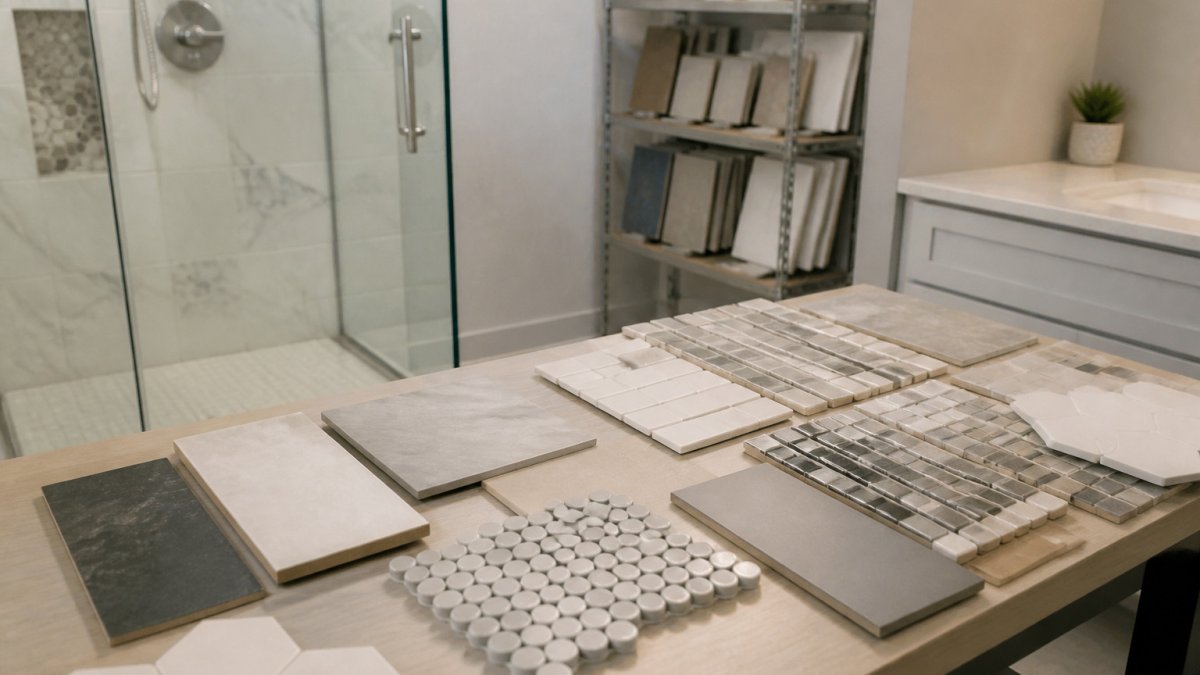
Match the format to the rating. Small-format tile and mosaics, commonly 2 by 2 inches or smaller, give more grout lines, and those lines act as grip points underfoot. Larger floor tiles look cleaner but need a more aggressive surface texture to earn the same wet rating. A 12 by 24 inch polished porcelain may carry a high dry COF and still be a poor shower-floor choice.
Finish-by-finish floor suitability:
- Matte or textured porcelain: The most reliable default. Widely available with published wet DCOF values, low absorption, and finishes that hide soap film. Confirm the specific SKU's rating, because texture varies by line.
- Unglazed or textured through-body porcelain: Good grip and repairability, but the surface can stain and needs sealing in some lines. Check the manufacturer's maintenance instructions.
- Glazed ceramic floor tile: Works when the glaze is rated for floors and the wet DCOF is published. Avoid high-gloss glazed wall tile on the shower floor.
- Natural stone: Slate and honed travertine can perform well when textured and sealed, but ratings vary by cut and finish. Polished marble is the classic mistake, beautiful, and hazardous under soap and water.
- Glass and polished mosaic: Visually strong but slick when wet. Use on walls or accents, not as the primary shower floor.
Do not treat wall and floor tile as interchangeable. A tile rated for wall use may carry no wet COF rating at all.
The shower floor carries the most safety risk, so the article compares common floor options by their key characteristic.
| Material | Best for | Key difference |
|---|---|---|
| Matte or textured porcelain | Reliable floor default | Published wet DCOF values; hides soap film |
| Unglazed textured porcelain | Grip and repairability | Can stain; needs sealing in some lines |
| Glazed ceramic floor tile | Floors with published rating | Glaze must be rated for floors |
| Natural stone (textured, sealed) | Organic look | Ratings vary by cut and finish |
| Glass and polished mosaic | Walls or accents | Slick when wet; not a primary floor |
Porcelain vs. Ceramic Tile for Showers
Porcelain and ceramic are the two materials most renovators compare. Both are common, both work in wet areas, and both are widely available, so the choice usually comes down to density and absorption.
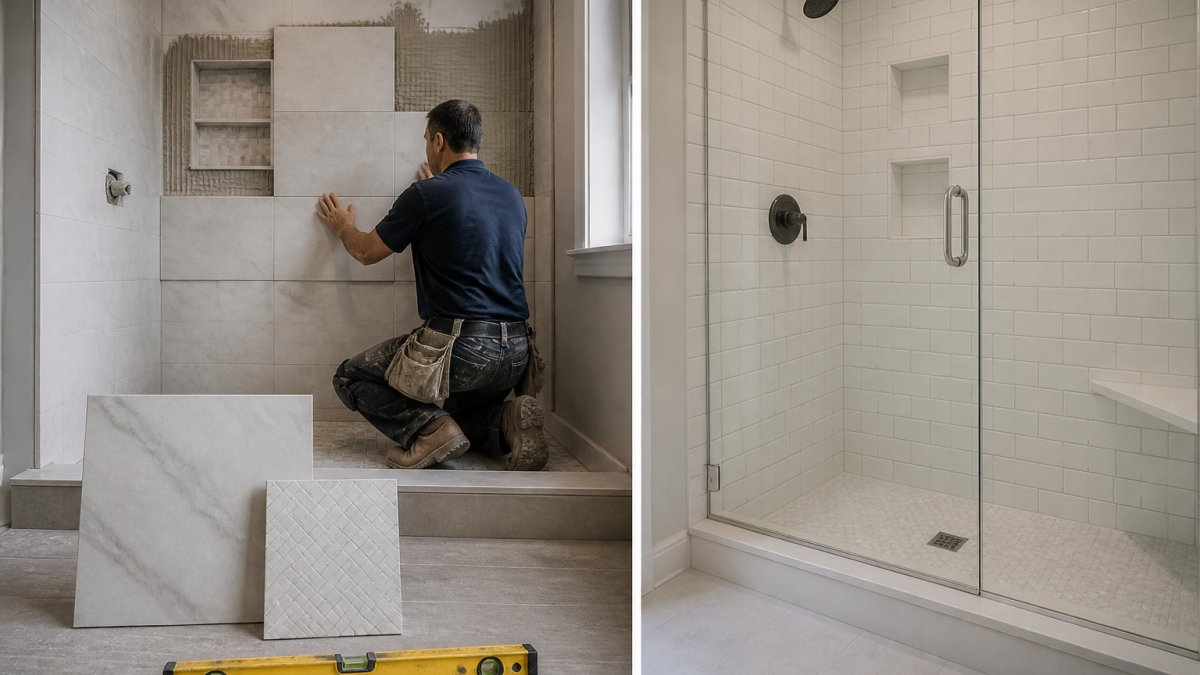
Porcelain is fired at higher temperatures and is denser, which makes it less porous. Selecting the right material becomes even more critical when spatial constraints dictate the specific tile types for bathrooms.
Material cost varies by brand, size, and finish.
Natural Stone Shower Tile Pros and Cons
Marble, slate, and travertine give a shower a high-end, organic look. They also come with maintenance demands that many homeowners underestimate.
Natural stone is porous, so it needs sealing at installation and periodic resealing afterward. Acidic cleaners can etch marble and dull travertine, so cleaning routines must change.
Common pros include unique veining, a warm feel underfoot, and long life when maintained. The cons include higher cost, heavier weight, more complex installation, and the need for a contractor who knows stone.
Glass, Mosaic and Specialty Materials Compared
Glass tile, mosaic sheets, zellige, and terracotta each bring a distinct look to a shower. Each also brings trade-offs in water resistance, maintenance, and installation effort.
Glass tile is nonporous and resists stains well, which suits showers. It is also slick when wet and shows water spots and fingerprints easily.
Mosaic sheets make curved and patterned designs easy to install, but the grout lines add cleaning time.
Waterproofing, Cleaning and Lifecycle Cost by Material
Tile is only part of a waterproof shower.
Tile and grout are not the waterproofing layer. Cement backer board is water-resistant but not waterproof; it can wick moisture. A proper shower assembly uses a continuous waterproofing layer tied into the drain and carried up the walls and over curbs and benches. The common systems:
- Sheet-applied membranes: A bonded waterproof sheet (often a fleece-faced polyethylene or PVC product) rolled over the substrate and sealed at seams, corners, and the drain with proprietary banding and sealant. Fast and reliable when installed to the manufacturer's details.
- Liquid-applied membranes: A trowel- or roller-applied coating built up in multiple coats to a specified thickness. Good for complex shapes, but thickness control and cure time matter, and it must be reinforced at corners and changes of plane.
- Coated backer boards: Cement or gypsum boards with a factory-applied waterproof coating, installed with sealed seams and specific fasteners. Fewer wet trades, but the seam detailing is where errors happen.
- Traditional mortar-bed with a liner: A pre-slope, a PVC or CPE liner, and a mortar bed. Proven, but the pre-slope and drain clamping details are easy to get wrong.
Whichever system is used, the critical details are the same: a pre-sloped substrate under the membrane, a drain connection made with the manufacturer's flange or seal, waterproofing carried above the showerhead height on walls, and correct transitions at curbs, niches, and wall-to-floor joints. Our guide to managing renovation subcontractors explains how tile installers and waterproofing trades are coordinated on a project.
Cleaning depends on water hardness and product compatibility. Hard water leaves mineral buildup that dulls glass and etches some stone; a water softener or a squeegee routine reduces the load.
Lifecycle cost is the total cost over the life of the shower: purchase, installation, waterproofing system, sealing, cleaning supplies, and eventual repair or replacement. A common pattern:
- Porcelain: Higher material cost than ceramic, but low absorption, no routine sealing, and easy tile replacement. Often the lowest lifetime cost for most households.
- Ceramic: Lower upfront cost and easy to cut, but more porous if the glaze chips; best value on walls in lower-traffic bathrooms.
- Natural stone: Highest upfront cost plus periodic resealing, pH-neutral cleaners, and specialized repair. Beautiful and long-lived when maintained, but the maintenance budget is real.
- Glass and mosaic: Moderate material cost but high installation labor because of the number of pieces and grout lines; grout cleaning adds up over time.
Repairability matters too. A damaged porcelain or ceramic tile is usually easy to replace if you kept spares and the substrate is sound.
Choosing Your Shower Tile Before Your Renovation Starts
Make the material decision before you order fixtures, cabinets, or paint. Shower tile sets the timeline, because the substrate and waterproofing must be ready before tile installation begins. Changing the tile late can force rework.
Start by answering four questions. What is the wall and floor requirement? How much cleaning are you willing to do? What is your budget for installation and maintenance, not just materials? Who will install it, and do they have experience with your chosen material?
When your tile choice is settled, request a quote from Allied Construction Corp.
Frequently Asked Questions
What type of tile is best for bathroom shower walls?
Porcelain and ceramic wall tile are the most common choices for shower walls because both are dense, low in water absorption and easy to wipe clean. Porcelain is generally the more durable option and handles large-format sizes well, while ceramic is typically less expensive and works well for smaller, traditional layouts. Glazed finishes resist staining and soap buildup better than matte or textured surfaces. For a durable, low-maintenance wall, look for a tile rated for wet areas and pair it with a quality grout or sealed grout line. For a project estimate, request a free estimate from Allied Construction Corp.
Is porcelain or ceramic tile better for a shower?
Porcelain is usually the better choice for a shower because it is denser and absorbs less water than standard ceramic, which makes it more resistant to moisture, staining and wear over time. Ceramic remains a practical option for shower walls, especially in lighter-use bathrooms, and it is often easier to cut and install for DIY-minded homeowners. For shower floors, porcelain with a textured or matte finish offers better slip resistance. Both materials perform well when installed over a properly waterproofed substrate, which matters more than the tile choice alone.
Can natural stone tile be used in a shower?
Natural stone such as marble, slate and travertine can be used in showers, but it requires more care than porcelain or ceramic. Most stones are porous and must be sealed regularly to resist water absorption, staining and etching from soap, shampoo and hard-water minerals. Marble and travertine can etch when exposed to acidic cleaners, so pH-neutral products are recommended. Slate offers strong slip resistance on floors. Natural stone suits homeowners who want a distinctive look and accept ongoing maintenance.
What tiles should not be used on a shower floor?
Avoid high-gloss or polished tiles on shower floors, since wet, smooth surfaces are a common slip hazard. Highly porous natural stone that is not properly sealed, and thin wall-grade tiles not rated for floor loads, should also be avoided. Mosaic glass can be slippery when wet unless it has a textured finish. Look for tiles with a slip-resistance rating and a matte or textured surface, and confirm that the product is intended for floor use before installation.