 How-to
7 Energy-Efficient Appliances That Transform Small Kitchens
Last Updated: October 24, 2026
Quick Summary
Energy efficient appliances small kitchens require matching capacity to actual need and selecting ENERGY STAR certified models with lower annual energy consumption. While compact appliances use less total energy, they consume more energy per cubic foot than standard models, making careful selection essential for long-term savings.
- ENERGY STAR compact refrigerators typically use 400-550 kWh annually versus 600+ kWh for non-certified models
- An ENERGY STAR dishwasher uses 3-5 gallons of water per cycle compared to 15-30 gallons for hand washing
- Electric cooktops convert 70-90% of energy into heat versus 40-55% for gas cooktops
- Total cost of ownership over 10-12 years often makes higher-priced efficient models cheaper than lower-priced inefficient ones
- Compact dishwashers hold 6-8 place settings and use proportionally less water and energy than standard 24-inch models
Table of Contents
- Why Energy Efficiency Matters in Compact Kitchens
- Understanding ENERGY STAR Kitchen Appliances and What They Really Save
- Reading the EnergyGuide Label: Appliance Comparison Made Clear
- Compact Refrigerators and Freezers: Space and Efficiency Trade-Offs
- Selecting an Energy-Efficient Refrigerator for Small Kitchen Layouts
- Cooktops, Ranges, and Countertop Appliances: Energy Use by Cooking Method
- Why a Compact Energy-Efficient Dishwasher Beats Hand Washing
- Calculating Total Cost of Ownership Before You Buy
- Frequently Asked Questions
Why Energy Efficiency Matters in Compact Kitchens
Choosing energy efficient appliances small kitchens isn't just about saving money on utility bills, it's about making smart investments that fit your space and your lifestyle. When your kitchen is tight on square footage, every appliance choice compounds over time. An inefficient refrigerator running 24/7 in a 70-square-foot kitchen wastes far more energy proportionally than the same unit in a sprawling kitchen.
The real tension in small kitchens is this: compact appliances often sacrifice efficiency to save space. Manufacturers cram smaller motors and cooling systems into tighter frames, which can drive up energy consumption per cubic foot of storage. But this isn't inevitable. Modern energy-efficient appliances have solved this problem through smarter design, better insulation, and precision controls. The key is knowing what to look for.
At Allied Construction Corp, we help homeowners in Nassau, Suffolk, and the five boroughs plan kitchen renovations that balance space constraints with long-term operating costs. When clients ask about appliance selection, the conversation always starts with energy efficiency, because a small kitchen that runs hot and wastes electricity becomes an expensive kitchen. The U.S. Environmental Protection Agency's ENERGY STAR program tracks which appliances meet strict efficiency standards, and that data reveals a clear pattern: the most efficient compact models outperform their larger, standard-sized counterparts in energy use per unit capacity.
Understanding this trade-off is your first step. Compact doesn't have to mean wasteful. Strategic selection can deliver both space savings and lower operating costs.
Understanding ENERGY STAR Kitchen Appliances and What They Really Save
ENERGY STAR certification means an appliance meets or exceeds federal efficiency guidelines set by the EPA. For kitchen appliances, this translates to measurable reductions in electricity and water consumption compared to non-certified models. An ENERGY STAR refrigerator uses less energy to maintain the same temperature. An ENERGY STAR dishwasher cleans dishes with less hot water.
But here's what most guides miss: ENERGY STAR doesn't mean "efficient for a compact model." It means efficient compared to the baseline for that appliance category. A small ENERGY STAR refrigerator might still use more electricity per cubic foot than a standard full-size model because compact designs have inherent efficiency challenges.
When you're evaluating energy efficient appliances for small kitchens, ENERGY STAR is your starting filter. Look for the blue label on the appliance or check the product specifications. But don't stop there. The label tells you the appliance is certified; it doesn't tell you whether it's the right choice for your specific space and cooking habits.
Reading the EnergyGuide Label: Appliance Comparison Made Clear
Every major appliance sold in the United States carries an EnergyGuide label. This bright yellow tag displays estimated annual energy consumption and operating cost. Most people glance at it and move on. That's a mistake. The EnergyGuide label is your direct comparison tool.
The label shows annual energy use in kilowatt-hours (kWh) for refrigerators, or gallons of water per year for dishwashers. Below that, you'll see a comparison range: "Estimated yearly operating cost: $XX" based on national average electricity rates.
Here's the critical part: that operating cost estimate assumes national average electricity rates. Your actual cost may be higher or lower depending on your regional rates. But the comparison between two appliances holds true regardless.
For small kitchens, this matters enormously. A compact refrigerator running for 10+ years at higher energy consumption adds up. A dishwasher that uses more water per cycle compounds across hundreds of wash cycles annually. The EnergyGuide label lets you calculate total cost of ownership before you buy.
| Appliance Type | Key EnergyGuide Metric | Why It Matters |
|---|---|---|
| Refrigerator | Annual kWh consumption | Runs continuously; small differences compound |
| Dishwasher | Water use per cycle + energy per cycle | High-frequency use; water heating costs add up |
| Cooktop/Range | Energy source (gas vs. electric) | Affects both appliance cost and operating cost |
| Microwave | Wattage and annual operating hours | Lower priority; minimal annual cost impact |
Compact Refrigerators and Freezers: Space and Efficiency Trade-Offs
Compact refrigerators present the core challenge of small-kitchen appliance selection. A standard full-size refrigerator (around 20-24 cubic feet) is engineered for efficiency at scale. A compact unit (4-8 cubic feet) uses less total energy but consumes more energy per cubic foot because insulation and cooling systems don't scale down proportionally.
When you're choosing a compact refrigerator, focus on three factors: total capacity, freezer-to-fridge ratio, and energy consumption. A 7-cubic-foot compact fridge with a large freezer compartment uses more energy than a 7-cubic-foot model with a small freezer, because freezing requires more work than refrigeration. If you rarely use frozen food, a compact fridge with minimal freezer space saves energy.
Many compact models come with top-mounted or side-mounted freezers. Top-mounted freezers are more efficient because cold air naturally sinks. If you have a choice between a top-freezer compact model and a side-by-side compact model, the top-freezer version will use less energy.
Look for compact refrigerators with manual defrost or frost-free cycles that minimize energy use. Frost-free systems use more electricity but reduce maintenance. In a small kitchen where you're watching every kilowatt, manual defrost can save energy, but it requires discipline to defrost regularly.
The EnergyGuide label is essential here. Compare annual kWh consumption directly between models you're considering. A difference of 50-100 kWh per year might seem small, but over a 10-year appliance lifespan, that's 500-1,000 kWh, enough to cover weeks of electricity use.
Selecting an Energy-Efficient Refrigerator for Small Kitchen Layouts
An energy-efficient refrigerator for small kitchen layouts requires matching capacity to actual need and selecting models with proven efficiency ratings. Start by measuring your available space, including height, width, and depth. Don't just eyeball it; write down exact dimensions.
Next, assess your household size and cooking habits. A single person or couple can function with a 4-5 cubic-foot refrigerator. A family of four typically needs 6-8 cubic feet minimum.
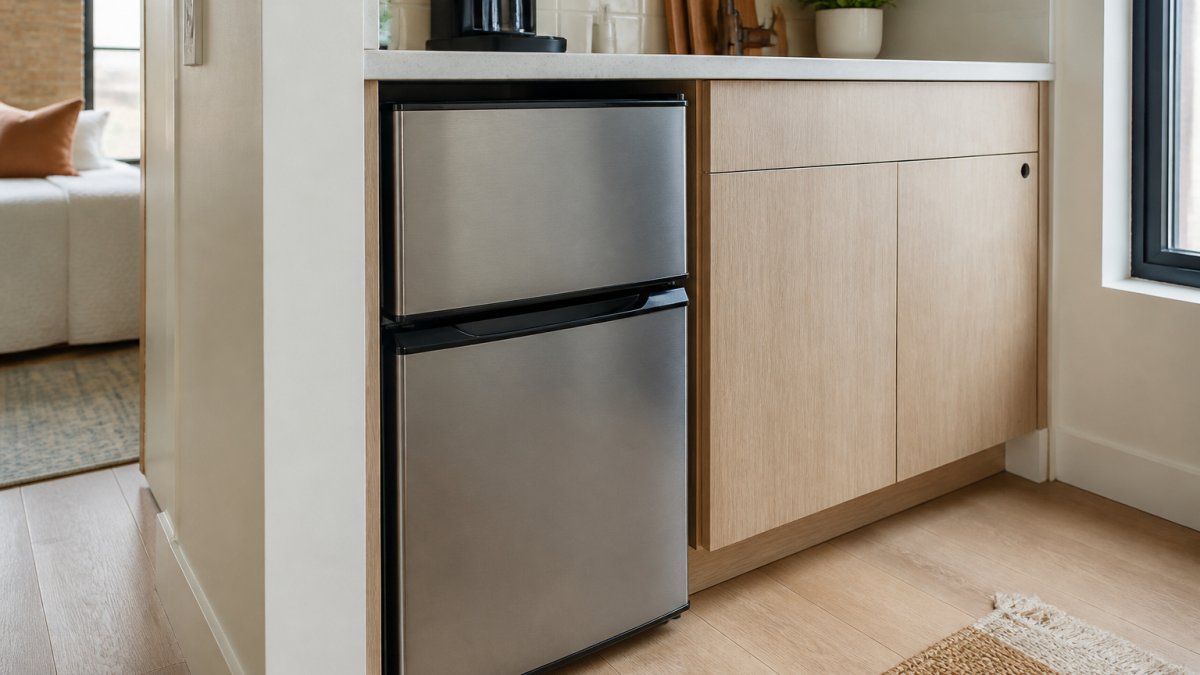
Look for refrigerators with adjustable shelving and door bins. Flexibility helps you organize food efficiently and reduces the time you spend with the door open. Every second the door stays open, the compressor works harder to restore temperature.
Check the EnergyGuide label for annual kWh consumption and compare across models in your size range. An ENERGY STAR compact refrigerator typically uses 400-550 kWh annually, while non-certified compact models may use 600+ kWh.
Cooktops, Ranges, and Countertop Appliances: Energy Use by Cooking Method
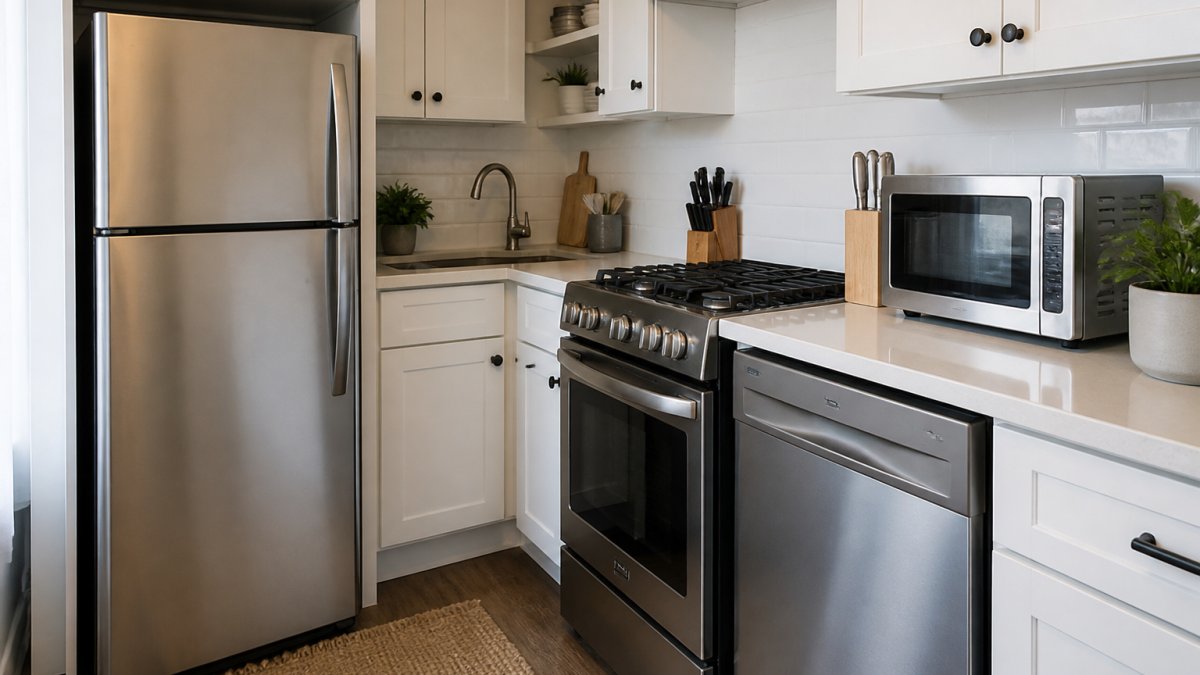
Cooktops and ranges account for a smaller portion of kitchen energy use than refrigerators, but the choice between gas and electric significantly affects both operating cost and efficiency. Electric cooktops (including induction) convert 70-90% of energy into heat.
However, efficiency isn't the only consideration. Gas cooktops offer immediate heat control and work with any cookware. Electric cooktops require compatible cookware and take longer to heat and cool.
In a small kitchen, countertop appliances often replace or supplement a traditional range. A compact toaster oven, microwave, or air fryer can handle most cooking tasks while using less energy than a full-size range.
Microwaves are highly efficient for reheating and cooking certain foods. They use 600-1,000 watts and cook food faster than conventional ovens, which means less energy overall. A microwave paired with a compact cooktop often delivers better efficiency than a traditional range for small-kitchen cooking patterns.
Multi-function appliances like Instant Pots or pressure cookers reduce cooking time dramatically. Shorter cooking times mean less energy consumed. These appliances are particularly efficient for households that cook frequently.
Why a Compact Energy-Efficient Dishwasher Beats Hand Washing
This one surprises most people: an ENERGY STAR dishwasher uses less water and less energy than hand washing dishes. A modern efficient dishwasher uses 3-5 gallons of water per cycle. Hand washing a full sink of dishes uses 15-30 gallons.
An ENERGY STAR dishwasher uses approximately 300 kWh annually, roughly the same as a single 60-watt lightbulb running continuously for a month. Hand washing dishes requires heating water on the stove or using hot water from your water heater, which consumes more energy overall.
In a small kitchen, a compact dishwasher (18 inches wide instead of the standard 24 inches) fits the space constraint while delivering these efficiency benefits. Compact dishwashers hold fewer place settings, typically 6-8 versus 12-14 for standard models, but they use proportionally less water and energy.
The real advantage of a compact energy-efficient dishwasher is consistency. Hand washing efficiency depends on behavior: how long you let water run, how hot you make it, whether you rinse before washing. An ENERGY STAR dishwasher performs the same efficient cycle every time.
Calculating Total Cost of Ownership Before You Buy
Total cost of ownership (TCO) combines purchase price with operating costs over the appliance's lifespan. For a refrigerator that runs for 10-15 years, operating cost often exceeds the initial purchase price.
Here's how to calculate it: Start with the purchase price. Add the annual operating cost (from the EnergyGuide label) multiplied by the expected lifespan.
Now compare two models:
- Model A: $450 purchase price, $75 annual operating cost = $450 + ($75 × 12) = $1,350 TCO
- Model B: $350 purchase price, $110 annual operating cost = $350 + ($110 × 12) = $1,670 TCO
Model A costs $100 more upfront but saves $320 over 12 years. The more efficient model wins on total cost.
This calculation changes when you factor in installation and renovation costs. Learn how to avoid kitchen renovation cost overruns when planning your appliance purchases and kitchen work.
For dishwashers and cooktops, the same principle applies. Request an estimate to understand how appliance installation and kitchen modifications fit into your total project cost.
The mistake most homeowners make is comparing only purchase price. Energy efficient appliances small kitchens require upfront investment but deliver long-term savings.
When you're planning a kitchen renovation that includes appliance selection, the decisions you make now affect your utility bills for the next decade.
Frequently Asked Questions
How do I choose energy-efficient appliances for a small kitchen?
Start by measuring your space and identifying which appliances you actually use daily. Prioritize energy-efficient appliances for high-use items like refrigerators and dishwashers. Look for ENERGY STAR certification and compare EnergyGuide labels to see annual energy costs. Choose right-sized models that match your household's actual cooking habits, an oversized appliance wastes both space and energy. Consider multi-function appliances that replace several devices, reducing your overall footprint and electricity use.
What should I look for on the EnergyGuide label when comparing appliances?
The EnergyGuide label shows estimated annual energy use in kilowatt-hours and the projected yearly operating cost in dollars. Compare these figures across similar models, not different appliance types. The label also displays how that model ranks against similar units, look for the lowest annual energy cost. Pay attention to the capacity rating to ensure you're comparing appliances of similar size. This label is your most reliable tool for estimating long-term operating costs and energy savings.
Are ENERGY STAR-certified kitchen appliances worth the higher purchase price?
ENERGY STAR appliances typically cost 10-15% more upfront but deliver measurable savings over their lifespan. A compact ENERGY STAR refrigerator might save $15-25 per year on electricity compared to a non-certified model. Over 10-15 years, those savings compound significantly. The real value depends on your usage patterns and local electricity rates. Calculate payback by dividing the price difference by annual energy savings; if payback is under 5 years, the investment usually makes financial sense.
Which uses more energy: a gas cooktop, electric cooktop, or induction cooktop?
Induction cooktops are most energy-efficient, converting about 85% of energy into heat. Electric coil and smooth-top cooktops convert roughly 70-75%. Gas cooktops are least efficient at 40% energy conversion, though they offer faster heating in some cases. For small kitchens with limited electrical capacity, induction is ideal, it heats faster, uses less energy, and generates less ambient heat. However, induction requires compatible cookware and may need electrical upgrades in older homes.