 Listicle
Best Dehumidifiers for Preventing Basement Mold
Quick Summary
A dehumidifier prevents basement mold by keeping relative humidity between 30 and 50 percent, since growth becomes likely above 60 percent. Choose capacity based on moisture sources, seepage, and ventilation, and fix water entry first, because a dehumidifier only limits new growth.
- Keep basement relative humidity between 30 and 50 percent to limit mold growth.
- Measure humidity with a digital hygrometer at several points over several days.
- Size capacity by moisture sources, foundation seepage, and ventilation, not square footage alone.
- Keep a drain hose sloped downward from start to finish to prevent overflow.
- A dehumidifier does not remove existing mold; clean or remediate it separately.
Table of Contents
- Why Basements Grow Mold and Where a Dehumidifier Fits
- How We Tested and Evaluated the Dehumidifiers
- Ideal Basement Humidity Level and How to Measure It
- How to Size a Basement Dehumidifier by Conditions, Not Just Square Footage
- Basement Dehumidifiers With a Built-In Pump: Drainage Options Compared
- Top Basement Dehumidifier Picks for Mold Prevention
- How to Prevent Mold in a Basement Beyond the Dehumidifier
- Scheduling Your Basement Moisture Check With Allied Construction Corp
- Frequently Asked Questions
Why Basements Grow Mold and Where a Dehumidifier Fits
Last Updated: November 4, 2026
Most basement mold starts with one thing: moisture that never fully leaves the room. A dehumidifier is one of the most practical tools for controlling that moisture, but it works best when you understand where the water comes from. Basements often feel dry on the surface yet stay damp behind walls, under flooring, and around poorly sealed foundation joints.
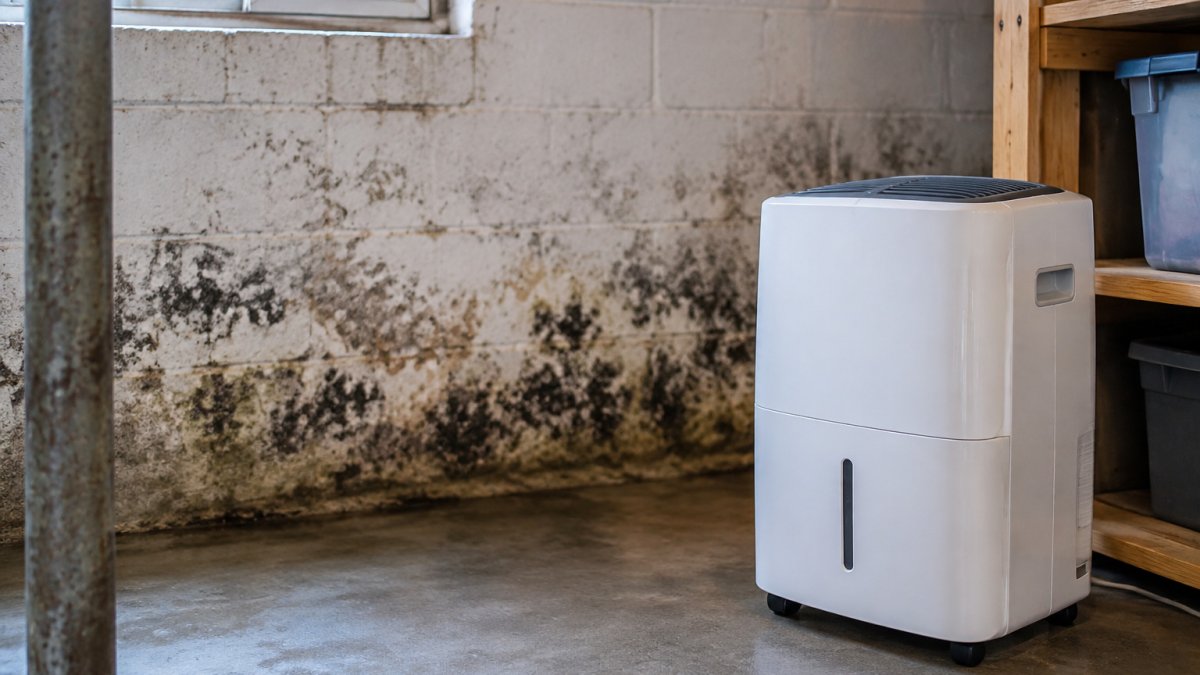
Mold needs moisture, a food source such as drywall paper or wood, and temperatures that stay mild. Basements often meet all three conditions. Ground moisture moves through concrete, condensation forms on cold surfaces, and stored items trap humidity against the walls. The Environmental Protection Agency recommends keeping indoor humidity below 60 percent to limit mold growth EPA guidance on mold and moisture control.
A dehumidifier fits in as a control for airborne moisture, not a fix for the source. If water is entering through a crack or a grading problem, a dehumidifier will run constantly and still lose ground. Treat the dehumidifier as the final layer of control, after you have addressed leaks, drainage, and ventilation.
How We Tested and Evaluated the Dehumidifiers
Our evaluation focused on how each unit performs in the conditions that matter for basement mold prevention, not on how it performs in a showroom. We combined manufacturer specifications, published third-party test data, and owner-reported reliability to score every unit on the criteria below. Where a claim could not be verified against a published source, we treated it as unproven rather than repeating it. Because verified performance data can show how reliably a dehumidifier controls moisture, pairing that evidence with steps to prevent basement flooding addresses another source of the damp conditions that encourage mold.
What we scored, and how:
- Moisture removal at basement temperatures. Rated pints per day are measured at 80 degrees Fahrenheit and 60 percent relative humidity under the AHAM DH-1 test standard. A basement in the low 60s is a different job. We weighted published low-temperature performance and defrost behavior heavily, because a unit that frosts up at 60 degrees removes almost nothing until it cycles back.
- Humidistat accuracy and control. We looked for units whose onboard sensor holds a setpoint within a few points of a calibrated hygrometer, and for adjustable setpoints down to 35-40 percent rather than a fixed "continuous" mode only.
- Drainage flexibility. Gravity hose, built-in pump, and tank capacity were scored separately. A pump is only useful if its lift height covers your actual run, and a tank is only useful if its capacity matches how often you will realistically empty it.
- Noise and placement. Compressor units typically run in the low-to-mid 50s dB(A); desiccant units often run quieter but cost more to operate. We noted sound levels because a unit you avoid running is a unit that does not prevent mold.
- Energy use and operating cost. We compared rated watts at typical basement conditions and translated that into a monthly cost at a representative residential electricity rate, so you can see the difference between an efficient 50-pint compressor unit and a less efficient alternative.
- Reliability and warranty. We favored units with published warranty terms, available service networks, and a track record of compressor and pump longevity rather than a single season of positive reviews.
Ideal Basement Humidity Level and How to Measure It
The commonly recommended target is 30 to 50 percent relative humidity. Above 60 percent, mold and dust mites tend to thrive on surfaces and in fabrics. Below 30 percent, the air can feel dry and may cause discomfort, so aim for the middle of the range.
Measure humidity with an inexpensive digital hygrometer placed away from the dehumidifier and any exterior walls. Check readings at several points in the room and over several days, since a single reading can mislead. Frequent readings above 60 percent are a sign that the dehumidifier is undersized or the moisture source is still active.
How to Size a Basement Dehumidifier by Conditions, Not Just Square Footage
Square footage is a starting point, but it misses the factors that drive moisture load. A finished basement with a sealed vapor barrier and good ventilation needs far less capacity than an unfinished space with an exposed floor, a laundry area, and frequent humid air from outside.
Consider these conditions when sizing:
- Moisture sources: Laundry, showers, aquariums, and drying clothes add significant water to the air.
- Foundation condition: Visible seepage or efflorescence on walls signals ongoing water intrusion that needs more capacity.
- Ventilation: A basement with little air exchange holds moisture longer.
- Starting humidity: A room that tests at 75 percent needs more removal than one at 55 percent.
Because pint ratings assume specific test conditions, many professionals suggest choosing a unit rated somewhat above your calculated need for a damp basement, then confirming results with a hygrometer after two weeks.
Basement Dehumidifiers With a Built-In Pump: Drainage Options Compared
Drainage determines how much attention the unit demands. Models that drain by gravity to a floor drain or sump need a hose run with a consistent downward slope. Models with a built-in pump can push water upward or across a longer distance, which helps in basements without a nearby drain.
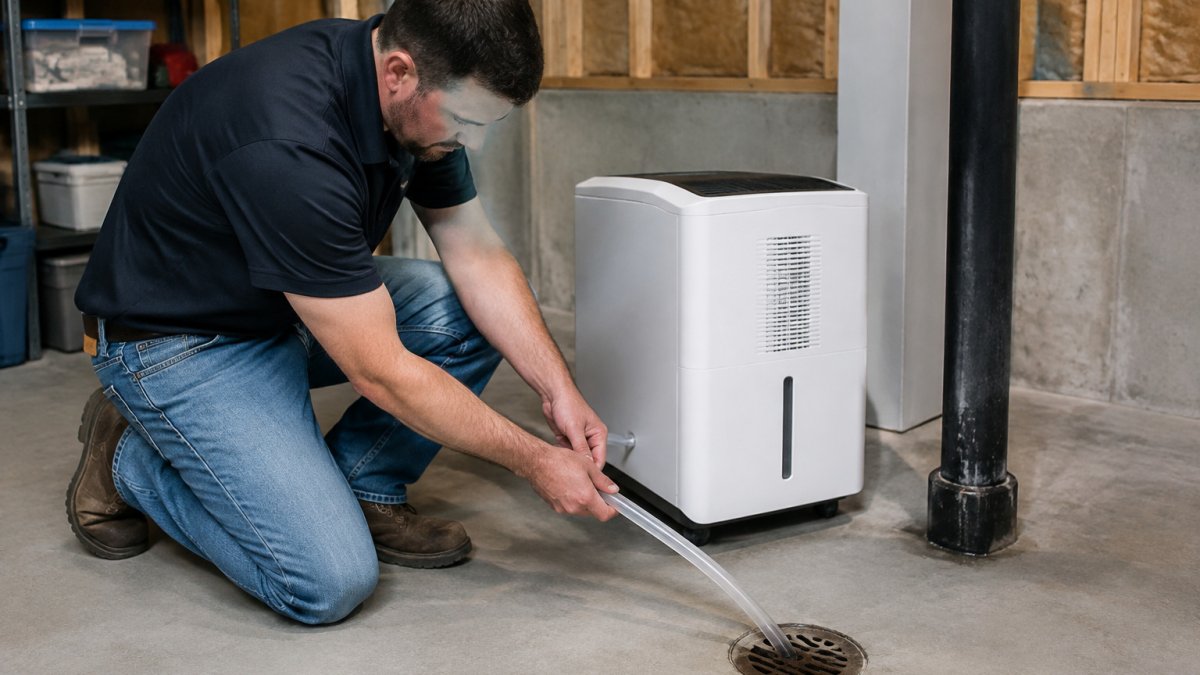
A built-in pump adds convenience but also a component that can fail. Check the pump's maximum lift height and whether the unit shuts off if the pump stalls. Continuous drainage avoids emptying a tank by hand, which matters most in winter when moisture loads are steady.
Watch out: a drain hose that rises after leaving the unit can trap water and cause the dehumidifier to shut down or overflow. Keep the hose sloped downward from start to finish.
Top Basement Dehumidifier Picks for Mold Prevention
Our picks reflect the criteria above: capacity suited to a damp basement, reliable drainage, controls that hold a steady target, and performance that does not collapse in a cool room. Pricing varies by model, retailer, and season, so confirm current prices with the manufacturer or seller before buying. The categories below are the shortlist to shop from, matched to the basement conditions each one handles best.
| Pick | Best For | Rated Capacity | Drainage | Key Spec to Check |
|---|---|---|---|---|
| Best overall for a typical finished basement | 1,000-1,500 sq ft, moderate dampness | 50-pint compressor class | Gravity hose or tank | Humidistat setpoint down to 40 percent; auto-restart after power loss |
| Best for large or very damp basements | 1,500+ sq ft, seepage or high humidity | 70-pint compressor class | Built-in pump | Pump lift height and auto-shutoff if the pump stalls |
| Best for cold, unfinished basements | Spaces that stay in the 50s Fahrenheit | Low-temperature compressor or desiccant | Gravity or pump | Rated operating range and defrost cycle behavior |
| Best for small, lightly damp rooms | Under 500 sq ft, closets, crawl-adjacent spaces | 20-30 pint class | Manual tank | Tank capacity and emptying frequency |
| Best budget-conscious pick | Occasional dampness, tight budget | 35-50 pint class | Gravity hose | Energy Star listing and rated watts |
Watch out: a drain hose that rises after leaving the unit can trap water and cause the dehumidifier to shut down or overflow. Keep the hose sloped downward from start to finish, or use a pump rated for the lift.
How to Prevent Mold in a Basement Beyond the Dehumidifier
A dehumidifier works best as part of a broader plan. Start with the water sources: clean gutters, extend downspouts at least several feet from the foundation, and ensure the soil slopes away from the house. Seal visible cracks and check for leaks around windows and utility penetrations.
Next, improve airflow. Use exhaust fans in bathrooms and laundry areas, and keep storage off the floor and away from exterior walls. Insulate cold water pipes to limit condensation.
If you already see mold, clean small areas with detergent and water and dry them completely. Larger growth, or mold linked to water intrusion, calls for professional remediation. Note that a dehumidifier does not remove existing mold; it only limits new growth. For guidance on safe cleanup boundaries, see our guide to hidden mold signs after smoke damage Signs of Hidden Mold After Smoke Damage: 2026 Guide.
If the basement needs structural or moisture-control work, our basement remodeling services address dampness at the source.
Scheduling Your Basement Moisture Check With Allied Construction Corp
If your basement has persistent dampness, a professional check can identify whether the problem is condensation, seepage, or a drainage fault. Allied Construction Corp serves clients across Nassau and Suffolk counties and all five boroughs with remodeling and restoration services. If water is actively entering the space, emergency water damage repair may be the more urgent step.
To book a check, request an estimate or contact the team directly. Current pricing depends on the scope of work, so request a quote for an accurate figure.
Frequently Asked Questions
What humidity level prevents basement mold? Keeping relative humidity between 30 and 50 percent is the common target. Readings above 60 percent give mold the conditions it needs to grow on surfaces.
How big a dehumidifier do I need for a basement? Start with square footage, then adjust for moisture sources, foundation seepage, and ventilation. A damp or poorly ventilated basement needs more capacity.
Do dehumidifiers kill mold? No. A dehumidifier limits new mold growth by reducing moisture, but existing mold must be cleaned or removed separately.
Frequently Asked Questions
What humidity level helps prevent mold in a basement?
Keep relative humidity between 30 and 50 percent to discourage mold growth in a basement. Many homeowners aim for about 40 percent in summer and check readings with an inexpensive digital hygrometer placed away from the dehumidifier itself. Readings above 60 percent for extended periods give mold spores the moisture they need to grow on drywall, wood and stored items. Measuring in several spots helps reveal damp corners that a single reading would miss.
What size dehumidifier do I need for a basement?
Basement dehumidifier sizing depends on more than square footage. Damp, poorly sealed basements with water intrusion, a crawlspace or a finished space with lots of stored items often need a unit rated for a larger pint capacity than the floor area alone suggests. Check the manufacturer's pints-per-day rating at the expected temperature and humidity, and choose a model that can reach your target humidity in your actual conditions.
Should a basement dehumidifier drain continuously?
Yes, continuous drainage is usually the better choice for a basement that stays damp for long periods. A gravity drain hose or built-in pump removes condensate automatically, so the tank does not fill and shut the unit off. Units without a drain require emptying the tank daily, which is easy to forget and can leave the basement damp when the tank is full.
Can a dehumidifier prevent mold in a basement?
A dehumidifier can prevent new mold growth by keeping humidity low, but it cannot remove existing mold or fix the cause of water intrusion. Mold that is already visible, or that covers more than a small area, calls for proper cleanup and sometimes professional remediation. Address leaks, grading and ventilation first, then use a dehumidifier to hold humidity in a range that discourages regrowth.