 How-to
Does Homeowners Insurance Cover Unpermitted Work?
Last Updated: October 26, 2026
Quick Summary
Homeowners insurance may still cover a loss on a home with unpermitted work, because coverage often depends on what caused the damage rather than on the permit status alone. Insurers can dispute claims that link the loss to the unpermitted work, and your state's laws affect how those disputes are handled.
- Read your policy's exclusions and ask your agent direct questions in writing.
- Insurers may argue a loss arose from defective work rather than a covered peril.
- Ordinance or law exclusions can reduce payment for code upgrades after a loss.
- Keep photos, invoices, and inspection reports to separate unrelated damage from disputed work.
- Pull the permit record and get a licensed contractor's written scope before filing.
Table of Contents
- Why Unpermitted Work Creates Insurance Questions
- Does Homeowners Insurance Cover Renovations That Were Never Permitted?
- When an Insurer May Deny or Limit a Claim
- Unpermitted Work Versus Poor Workmanship: Why the Difference Matters
- How to Check If Home Renovations Were Permitted
- Contractor Liability Insurance and Permits
- Fire, Water, and Injury Risks Around Unpermitted Structures
- Booking a Permit Review Before You File a Claim
- Frequently Asked Questions
Renovations are supposed to make a home safer and more valuable. But when the work was never permitted, a homeowner can find that their insurance company questions the claim, even when the new damage has nothing to do with the project. Allied Construction Corp is a general contractor serving Nassau and Suffolk counties and all five boroughs. Whether homeowners insurance covers unpermitted work depends on the policy, the cause of the loss, and the facts of each claim. Below, we explain how insurers approach these claims and what homeowners can do to protect themselves. Determining whether the potential payout outweighs the risk of increased premiums or policy cancellation remains a critical step before filing an insurance claim.
Why Unpermitted Work Creates Insurance Questions
Unpermitted work is construction done without the required building permit or inspection. Insurers care about it because permits and inspections are how a building department checks that work meets code. Without that check, an insurer has less information about how the structure was built.
A common concern is that unpermitted work raises the risk of a loss. Electrical, plumbing, and structural changes are the usual examples. Insurers look at whether that risk actually contributed to the damage.
Does Homeowners Insurance Cover Renovations That Were Never Permitted?
Many homeowners policies do not automatically exclude a loss just because the work lacked a permit. The policy's wording matters most. Coverage often depends on the cause of the loss, not on the permit status alone.
Here is the short answer many people want:
- A fire, storm, or burst pipe may still be covered in some cases.
- The insurer may dispute the claim if it links the loss to the unpermitted work.
- Your state's laws can affect how these disputes are handled.
Read your policy's exclusions and ask your agent direct questions. A clear answer in writing is worth having before you need it.
When an Insurer May Deny or Limit a Claim
A denial is not automatic just because a permit is missing.
1. Causation tied to an excluded peril or defective work. Most homeowners policies are named-peril or open-peril forms that exclude losses arising from faulty workmanship, faulty design, or defective construction. If an electrical fire starts in wiring installed without a permit, the insurer may argue the loss arose from defective work rather than from a covered fire peril. A fire investigator's report that traces ignition to a specific junction box is far more persuasive than a general statement that the wiring was unpermitted.
2. Policy exclusions for ordinance or law and code upgrades. Standard forms commonly exclude the cost to bring a structure up to current code after a loss. That exclusion can shrink a repair payment even when the original damage is covered, because the contractor must now build to the code the unpermitted work never met. Ask your agent whether your policy includes any ordinance-or-law coverage and what limit applies.
3. Material misrepresentation on the application. If you were asked about renovations and did not disclose known unpermitted work, the insurer may raise misrepresentation. The outcome depends on whether the misstatement was material to underwriting and on your state's rules, some states allow rescission only for material misstatements, others apply a stricter standard.
4. Failure to mitigate or cooperate. Letting a leak run for weeks or declining to provide records can independently reduce or defeat a claim, separate from the permit issue.
Do not assume a denial letter is final. Request the written coverage decision and the specific policy language and facts the insurer relied on. That document is the starting point for any appeal or professional review.
Insurers typically rely on a few specific grounds when they dispute a claim tied to unpermitted work.
| Ground for denial or limit | What the insurer looks at | Homeowner response |
|---|---|---|
| Causation tied to defective work | Whether the loss arose from the unpermitted wiring or construction | Fire investigator report tracing ignition point |
| Ordinance or law exclusion | Cost to bring structure up to current code | Ask agent about ordinance-or-law coverage and limit |
| Material misrepresentation | Whether known unpermitted work was disclosed on application | Disclose accurately; check your state's standard |
| Failure to mitigate or cooperate | Delayed repairs or withheld records | Act promptly and provide documentation |
Unpermitted Work Versus Poor Workmanship: Why the Difference Matters
Unpermitted work and poor workmanship are not the same thing. A project can be fully permitted and still be built badly. A project can also be built well without a permit. Insurers and courts may treat these cases differently.
Poor workmanship is about the quality of the work. Unpermitted work is about whether the required approvals were obtained. Both can lead to damage, but the claim analysis can differ, so it helps to know which issue applies to your situation.
Damage Unrelated to the Unpermitted Work
Not all damage in a home with unpermitted work is connected to that work. A roof damaged by hail or a kitchen flooded by a dishwasher hose that was never touched by the project may have nothing to do with the permit issue.
Keep records that show what caused each loss. Photos, repair invoices, and inspection reports can help separate unrelated damage from the disputed work. This documentation can be the difference between a full claim and a denial.
How to Check If Home Renovations Were Permitted
A sequence to consider is confirming status, classifying what you find, then deciding what to tell the insurer and when. Work through these steps in order.
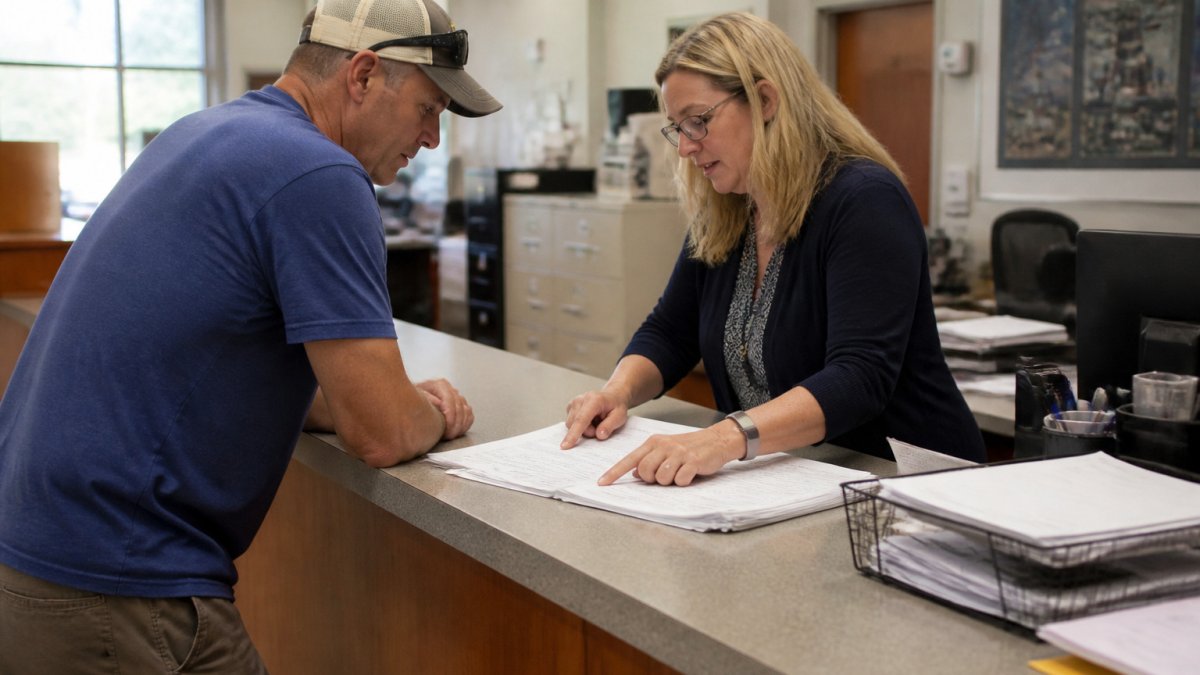
Step 1, Pull the permit record. Learn whether general contractors handle building permits before you start your search. Search by address with the city or county building department. Ask for the permit number, the scope of work, the contractor of record, and whether a final inspection was signed off. Request copies of approved plans and inspection cards. Many departments publish this online; others require a records request, which can take days to weeks.
Step 2, Classify what you find. There are three distinct situations, and they are not treated the same:
- Open permit, work incomplete or uninspected. The permit exists but the final inspection was never passed.
- No permit at all. The work was done without approval. Ask the building department whether it accepts a retroactive (after-the-fact) permit.
- Permitted and closed. The record shows a final inspection. Keep a copy, it is your best evidence if a future claim is questioned.
Step 3, Decide on remediation before you file. If the work is unpermitted, get a written scope from a licensed contractor describing what must be corrected to bring it into compliance. That scope does two things: it gives the building department something concrete to review, and it gives your insurer a documented path to a compliant property.
Photograph the work before any corrective opening, keep every invoice and inspection report, and store the permit record with your policy documents. A clean paper trail is the single strongest asset in a disputed claim.
Step 4, Tell the insurer, in writing.
Step 5, If a claim is denied or limited, respond methodically. Request the written coverage decision. Preserve evidence, photos, receipts, inspection reports, and the permit record. Review the policy's exclusions and definitions against the insurer's stated reason.
The goal is not to hide unpermitted work, it is to convert an unknown into a documented, inspectable record before a loss forces the issue.
Contractor Liability Insurance and Permits
Responsibility for permits can depend on the contract. The written agreement should say who handles permits and inspections. Our guide to managing renovation subcontractors explains how to check their coverage.
Fire, Water, and Injury Risks Around Unpermitted Structures
Unpermitted structures can create real safety risks. Fire can start from improper wiring or ventilation. Water can leak through poorly sealed additions. Our guide to fast water damage restoration timing covers practical steps for acting quickly. Someone can be hurt by a collapsed deck or an unsafe stairway.
These risks matter for insurance, and they matter for liability. If someone is injured on a property with unpermitted work, the homeowner may face a claim.
Fire and water damage restoration after a loss should also be handled carefully. Document the damage, keep receipts, and work with qualified professionals. For urgent restoration needs, Allied Construction Corp provides water, smoke, and fire damage restoration in our service area.
Booking a Permit Review Before You File a Claim
If you have unpermitted work and need to file a claim, consider a permit review first.
Allied Construction Corp offers kitchen remodeling and other renovation services. Before filing a claim, speak with your insurance agent and a licensed professional so you understand your coverage and your options.
Insurance questions around unpermitted work are rarely simple, but they are manageable with the right facts. Check your policy, confirm your permit status, and keep clear records of every loss. Taking those steps early gives you the strongest position if you need to file a claim.
Frequently Asked Questions
Does homeowners insurance cover damage caused by unpermitted work?
Coverage questions depend on the policy and the facts of the claim. Review your policy wording and discuss the claim with your agent.
Can an insurer deny a claim because work was done without a permit?
Whether an insurer can deny a claim depends on the policy and the facts of the claim. If you receive a denial, ask for the policy language relied on in writing and consider seeking professional advice.
How can you find out whether past work was permitted?
Contact the relevant building department to ask about permit records for the property. If you have questions about the records, consult a qualified professional.
What should you do if you discover unpermitted work in your home?
Document the work with photos and keep any receipts or contracts. Review your homeowners policy and consult a qualified professional about your options. Keep records of the steps you take.