 How-to
Health Risks of Mold After a House Fire: Symptoms to Watch
Last Updated: November 18, 2026
Quick Summary
Mold after house fire grows because firefighting water soaks into drywall, wood, insulation, and carpet padding, and growth can begin on wet materials within a few days. Watch for a musty earthy smell, dark spots, peeling paint, and allergy-like symptoms such as coughing, wheezing, and sneezing.
- Mold needs moisture, organic material, and time, and a house fire delivers all three at once.
- Soot and charred debris often hide mold, so watch for musty odors and spreading stains.
- People with asthma, allergies, children, and older adults tend to react most strongly to mold.
- Wear a respirator, gloves, and eye protection, and keep children and pets out until cleanup is complete.
- Seek medical care for trouble breathing, chest pain, fever, or symptoms that keep getting worse.
Table of Contents
- How Firefighting Water Sets Up Mold Growth
- Signs of Mold After Fire Damage
- Mold Symptoms: What Exposure Does to Your Body
- Long-Term Mold Exposure Symptoms and Who Is Most At Risk
- Separating Mold Symptoms From Smoke and Fire-Residue Effects
- Mold Cleanup After a House Fire: Safe Re-Entry and Exposure Reduction
- When to Seek Medical Care
- Request a Mold and Fire Damage Assessment
- Frequently Asked Questions
How Firefighting Water Sets Up Mold Growth
Mold after house fire rarely starts with the flames. It starts with the water used to put them out. The same water that saves your home can feed mold within days.
Mold needs three things to grow: moisture, organic material, and time. A house fire delivers all three at once.
Here is what happens. Firefighters pour hundreds of gallons into walls, ceilings, and floors. That water soaks into drywall, wood studs, insulation, and carpet padding. Much of it hides behind cabinets and inside wall cavities where nobody looks.
Mold growth can begin on wet materials within a few days. That is the window that matters most.
- Wet drywall paper feeds mold fast
- Damp insulation traps moisture against wood
- Soaked carpet padding stays wet for days
- Poor ventilation slows drying and speeds growth
The EPA guide to mold and moisture control is clear on the core point: control the moisture and you control the mold. Dry the structure fast and you cut the risk.
For a closer look at how quickly drying needs to happen, see our guide to a fast water damage restoration timeline.
Signs of Mold After Fire Damage
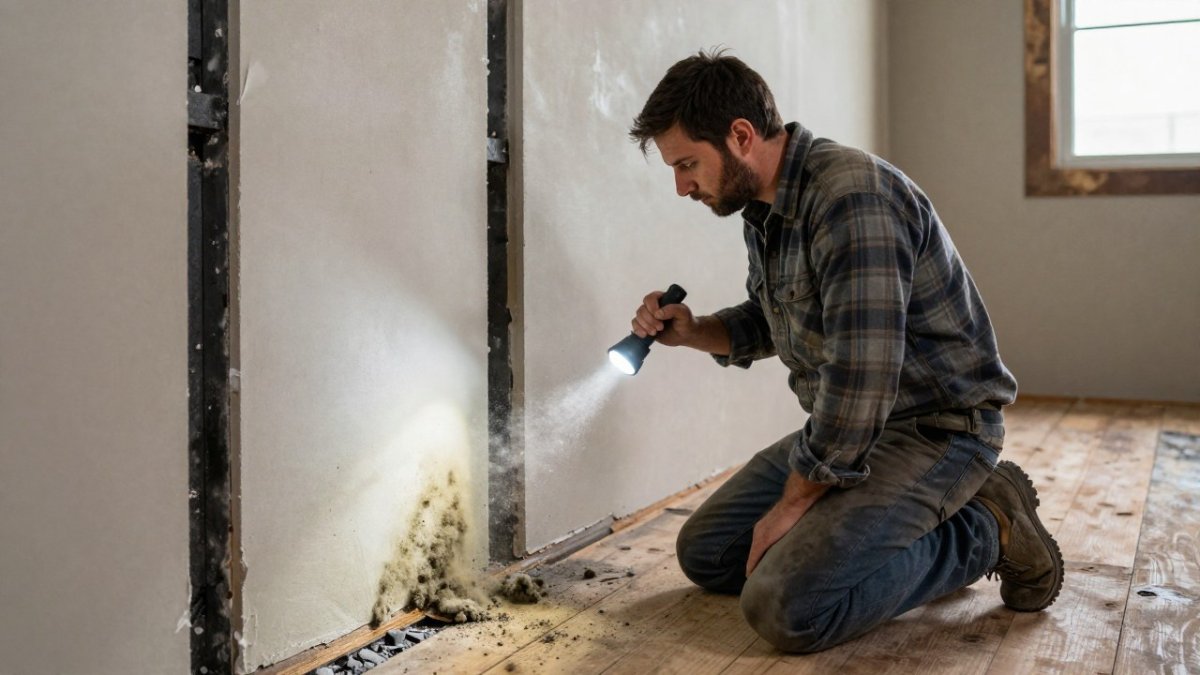
The tricky part is that fire damage hides the evidence. Soot coats walls, smoke smell masks other odors, and charred debris covers the surfaces where mold starts. You often cannot see it.
Look for these signs instead:
- A musty, earthy smell that lingers after smoke cleanup
- Dark spots or fuzzy patches on walls, ceilings, or trim
- Peeling paint or bubbling drywall
- Warped baseboards or swollen wood
- Visible staining that spreads over days
- A stale, damp feeling in closed rooms
Smoke residue and mold can look similar. Both darken surfaces. The difference is texture and smell. Soot wipes off as a dry powder. Mold grows, spreads, and smells like a wet basement.
If you spot any of these, treat it as active mold until an inspection proves otherwise. Our guide to the signs of hidden mold after smoke damage walks through where to look behind walls and under floors.
Mold Symptoms: What Exposure Does to Your Body
Mold symptoms after a house fire usually show up as allergy-like reactions. Mold releases spores and tiny particles into the indoor air. When you breathe them in, your immune system responds. After a fire, those spores are often riding on disturbed soot and charred debris, so exposure can spike the moment cleanup or demolition begins.
Common mold symptoms include:
- Wheezing and shortness of breath
- Coughing, often worse at night or in damp rooms
- A stuffy or runny nose
- Sneezing and itchy, watery eyes
- A sore throat or hoarse voice
- Headaches and fatigue
- Skin rash or irritation
- Worsening asthma flare-ups
Not everyone reacts the same way. Some people notice nothing at first. Others feel symptoms within hours of re-entering a damp home.
Respiratory and Allergic Reactions
The lungs take the biggest hit. Airborne spores reach deep into the airways and trigger inflammation. For people with allergies or asthma, even a small amount of mold exposure can set off a flare-up. The CDC guidance on mold and health notes that mold exposure can cause allergic reactions and irritate the eyes, skin, nose, throat, and lungs. Sensitive individuals often react most strongly.
Watch for:
- Persistent coughing that will not clear
- Chest tightness or wheezing
- Shortness of breath during normal activity
- A runny nose that lasts for weeks
Skin, Eyes, and Throat Irritation
Direct contact with mold or spores can irritate skin and eyes (the CDC). Touching contaminated surfaces without gloves can cause a red, itchy rash. Eye irritation shows up as burning, redness, and watering. A sore, scratchy throat is common after breathing spore-heavy air.
Keep a simple log of when symptoms start and stop and what room you were in; that record can help a doctor narrow down the cause.
Who Tends to React Most
Reactions are not evenly distributed. People with asthma or allergies, children, older adults, and anyone with a weakened immune system or existing lung condition are more likely to notice symptoms and to have them last longer. If someone in that group lives in the home, treat any musty odor or damp patch as a reason to act quickly rather than wait for visible mold.
Long-Term Mold Exposure Symptoms and Who Is Most At Risk
Most healthy adults recover from short-term mold exposure once the source is removed. The concern grows with long-term mold exposure symptoms, especially in a home that stays damp for weeks.
Repeated or prolonged exposure is linked to:
- Chronic coughing and sinus problems
- Ongoing fatigue and headaches
- Worsening allergies
- Persistent respiratory problems
- Trouble concentrating
Some groups face higher health risks:
- Children, whose lungs are still developing
- People with asthma, who may see frequent flare-ups
- People with allergies, who react to mold allergens
- Older adults and anyone with a weakened immune system
- People with existing lung conditions
If a child or someone with asthma lives in the home, act faster.
Separating Mold Symptoms From Smoke and Fire-Residue Effects
Here is where many homeowners get confused. Smoke and fire residue cause symptoms too. So how do you tell them apart?
Smoke and soot exposure tends to cause:
- Burning eyes and a scratchy throat
- A cough from fine particles
- Headaches and dizziness
- A strong smoke odor
Mold exposure tends to cause:
- A musty smell rather than a smoky one
- Allergy-type reactions like sneezing and a runny nose
- Symptoms that build over days, not minutes
- Relief when you leave, return when you come back
The two can overlap. A home can have both problems at once.
Mold Cleanup After a House Fire: Safe Re-Entry and Exposure Reduction
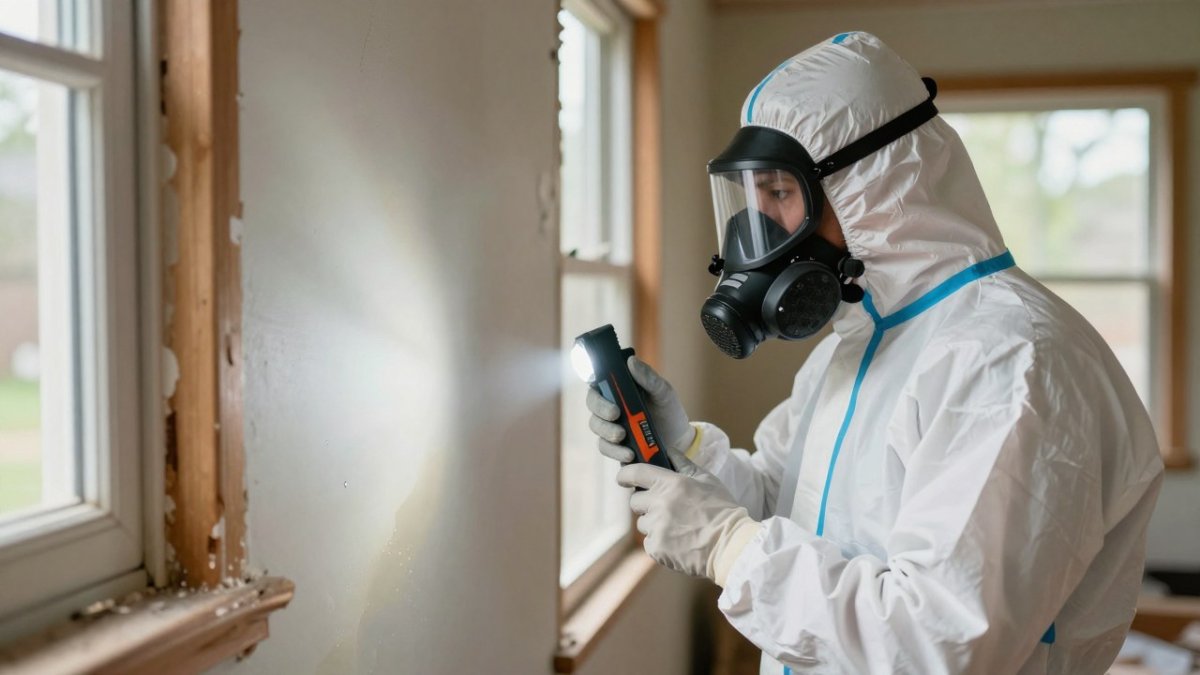
Safety comes before cleanup. Do not rush back into a damp, fire-damaged home without protection. The practical goal is to reduce exposure while you confirm where the moisture is.
Reduce your exposure with these steps:
- Wear protective equipment such as a respirator, gloves, and eye protection
- Keep the space ventilated with open windows and fans
- Limit the time you spend inside
- Do not disturb moldy materials, which sends spores into the air
- Keep children and pets out until cleanup is complete
Porous items like soaked drywall, insulation, and carpet often need removal. When in doubt, call a professional.
A Practical Inspection and Response Timeline
Use this timeline to guide your first two weeks, since early steps matter most.
| Timeframe | Action | Why It Matters |
|---|---|---|
| First 24-48 hours | Stop the water, start drying, and photograph everything | Mold can begin growing; photos support insurance and remediation decisions |
| Days 2-3 | Inspect wall cavities, under floors, and behind cabinets with a moisture meter | Hidden moisture hides where the eye cannot see |
| Days 3-7 | Remove wet porous materials and bag them for disposal | Wet drywall and padding feed mold and keep humidity high |
| Week 1-2 | Dry and monitor with a moisture meter, checking the same spots daily | Confirm the structure is actually dry, not just dry to the touch |
| Week 2+ | Clean hard surfaces, then verify with a visual check and smell test | Catch anything missed before it spreads |
Document everything with photos as you go. Insurance claims and remediation both depend on a clear record.
Protecting Vulnerable Occupants
If a child, an older adult, or someone with asthma or allergies lives in the home, treat re-entry as a staged process. Keep them out until drying is confirmed and any visible mold has been addressed. Set up a clean room away from the affected area if the household must stay on site, and avoid tracking spores from damp rooms into the rest of the house by changing shoes and outer layers at the threshold.
When to Bring In a Professional
Call a qualified restoration or inspection professional when moisture is behind walls, when the affected area is larger than a small patch, when there is a musty odor that will not clear, or when anyone in the home has asthma, allergies, or a weakened immune system. If you need help coordinating cleanup and follow-up, you can contact our team for guidance.
When to Seek Medical Care
Most mild mold symptoms ease once you leave the building and the mold is removed. Some signs need a doctor.
Seek medical care if you or a family member has:
- Trouble breathing or chest pain
- Wheezing that will not stop
- Symptoms that get worse over time
- A fever alongside respiratory symptoms
- Severe reactions in a child or someone with asthma
Do not self-diagnose. A doctor can tell you whether mold exposure is behind your symptoms or something else. If you need help coordinating cleanup and follow-up, you can contact our team for guidance.
Request a Mold and Fire Damage Assessment
You do not have to guess whether mold is growing behind your walls. A professional assessment finds the moisture, confirms the mold, and gives you a clear plan.
Allied Construction Corp handles fire, smoke, and water damage restoration across Nassau, Suffolk, and all five boroughs. We are a licensed home improvement contractor.
Here is what a proper assessment gives you:
Learn more about our water, smoke, and fire damage restoration services, or request an estimate to get started.
A damp, fire-damaged home will not dry itself, and mold will not wait. The sooner moisture is found and removed, the lower your health risks and repair costs. Allied Construction Corp brings licensed restoration expertise, full project management, and both residential and commercial experience to every job. Get started with Allied Construction Corp and get your home dry, clean, and safe again.
Frequently Asked Questions
What are the first signs of mold sickness after a house fire?
Early mold symptoms usually look like allergy complaints: a stuffy nose, sneezing, coughing, wheezing, sore throat, burning eyes, and skin rash or irritation. These appear within hours to days of spending time in a damp, fire-damaged home. Because smoke residue can cause similar irritation, pay attention to whether symptoms ease when you leave the building and return when you go back in. Anyone with asthma or allergies should be especially watchful and contact a doctor if breathing worsens.
Can mold grow after firefighters put out a house fire?
Yes. Firefighting water soaks drywall, insulation, wood framing, and carpet, and mold spores only need ongoing moisture to grow. In warm, humid conditions visible mold can appear within days, and hidden growth inside wall cavities can start before homeowners notice a smell. Fast drying and removal of saturated materials is the most reliable way to limit it. If your home sat wet for days before cleanup began, assume hidden mold is present and get an inspection.
Who is most at risk from mold exposure after a fire?
Children, older adults, pregnant people, and anyone with asthma, allergies, or a weakened immune system face the highest risk. People with asthma may see more frequent flare-ups and wheezing, while allergy sufferers can develop stronger reactions to airborne spores. If you fall into one of these groups, stay out of the home until drying and remediation are complete, and consider having restoration professionals handle debris removal and demolition rather than doing it yourself.
How can you reduce mold exposure during fire damage cleanup?
Stay out of wet areas until they are dried and cleared. When you must enter, wear an N95 respirator, eye protection, gloves, and long sleeves, and keep the visit short. Never dry-vacuum or sweep moldy debris, since that sends spores into the indoor air. Run dehumidifiers and fans only after the source of moisture is fixed, and have porous materials like soaked drywall and carpet removed rather than dried in place. A professional inspection can help confirm the problem is resolved before you move back in.