 How-to
How Do You Prevent Basement Moisture Problems?
Quick Summary
Prevent basement moisture by first identifying its source, then controlling it: grade soil away from the foundation, extend downspouts, and keep gutters clear to stop outside water, while keeping indoor humidity between 30 and 50 percent to stop condensation. Basement moisture from water entering the foundation needs drainage and sealing, whereas condensation needs humidity control and airflow.
- Run the plastic sheet test for 48 to 72 hours to tell water intrusion from condensation.
- Grade soil to slope about 6 inches over the first 10 feet away from the house.
- Extend downspouts at least 4 to 6 feet from the foundation.
- Keep indoor relative humidity between 30 and 50 percent, and below 60 percent to discourage mold.
- Insulate cold water pipes so they do not sweat and create condensation.
Table of Contents
- Why Basement Moisture Happens: Water Intrusion Versus Condensation
- Diagnosing the Moisture Source: A Step-by-Step Decision Tree
- Fixing Outside Water Problems: Grading, Gutters, and Downspouts
- Basement Waterproofing and Sealing Cracks and Leaks
- Controlling Basement Humidity and Preventing Condensation
- Seasonal Humidity Guidance and Installing Interior Drainage Solutions
- Prevention Checklist and When to Call a Professional
- Frequently Asked Questions
Why Basement Moisture Happens: Water Intrusion Versus Condensation
Last Updated: November 12, 2026
Basement moisture is one of the most common problems homeowners across Nassau, Suffolk, and NYC face, and it usually comes from one of two sources: water entering from outside, or humid air condensing on cold surfaces inside. The fix depends entirely on which one is causing the damp. Getting the diagnosis right first saves money and keeps you from paying for the wrong repair.
Water intrusion means liquid water is entering the basement.
Condensation happens when warm, humid indoor air meets a cold surface, such as a concrete wall or a cold water pipe.
Here is how to tell them apart:
- Water intrusion leaves puddles, water stains, white mineral deposits on the wall, or dampness after heavy rain.
- Condensation shows up as a general film or beads of water on cool surfaces, often worst in summer or during humid weather.
- Both at once is common. Water seeping through a wall can feed the damp, and humid air keeps that wall wet longer.
Many homeowners assume every damp basement has a leak, but a basement can feel clammy for months from humidity alone, even with a perfectly dry foundation.
Watch out: Sealing a wall that only has condensation will not fix the problem, and the dampness will come back.
Water intrusion calls for drainage and sealing work, while condensation calls for humidity control and better airflow.
Diagnosing the Moisture Source: A Step-by-Step Decision Tree
Use this simple process to find the source. You only need a flashlight, paper towels, plastic sheeting, and tape.
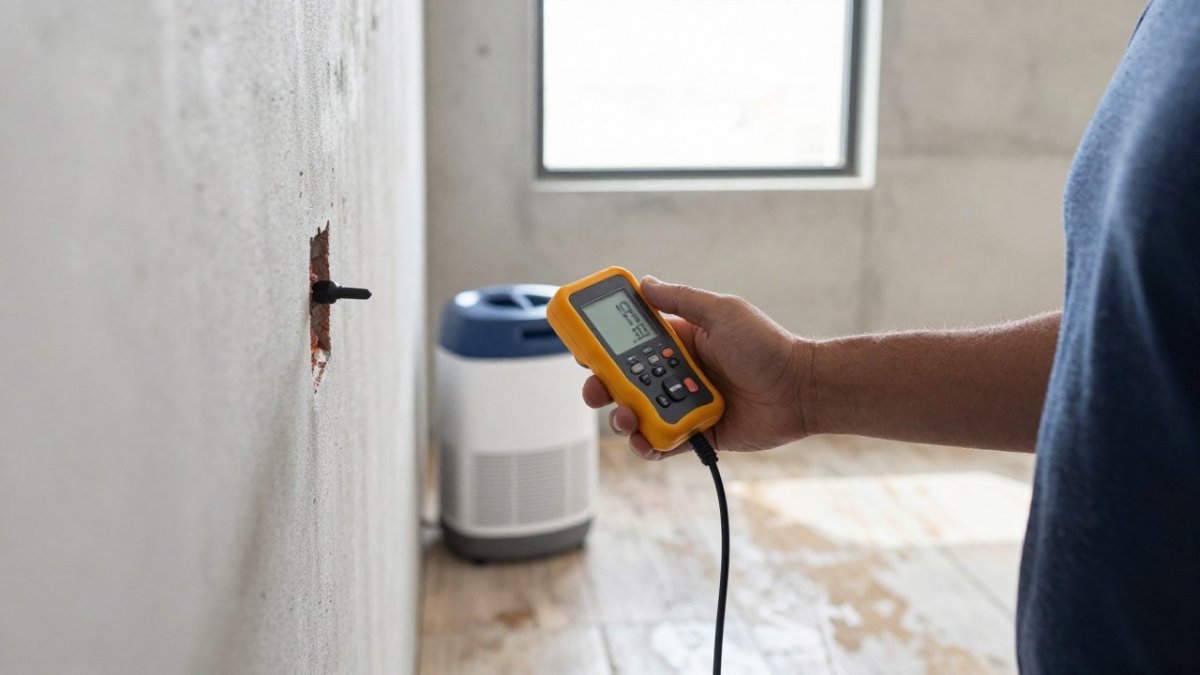
Step 1: Check after rain. Look at the basement walls and floor within 24 hours of a heavy rain.
Step 2: Try the plastic sheet test. Tape a square of plastic sheeting to a concrete wall or floor.
- If moisture forms on the room side of the plastic, the air in the basement is causing condensation.
- If moisture forms on the concrete side (under the plastic), water is moving through the wall or floor.
Step 4: Check the humidity level. A basic hygrometer shows your indoor humidity.
Step 5: Decide your next move.
- Water visible from outside or under the plastic? Start with drainage and sealing.
- Moisture only on the room side of the plastic, with humidity above 60 percent? Start with humidity control.
- Both? Fix the water first, then address the air.
Skipping the plastic test and guessing often leads to money spent on the wrong fix.
Fixing Outside Water Problems: Grading, Gutters, and Downspouts
Most basement water problems start outside. If water is actively getting in, emergency water damage restoration help in Nassau can help you respond quickly.
Grade the soil away from the house. The ground should slope down and away from the foundation. A common guideline is a drop of about 6 inches over the first 10 feet.
Extend your downspouts. Downspouts that dump water right at the foundation send thousands of gallons toward your basement walls over a season.
Keep window wells clear. Window wells collect leaves and water. Clean them out and use a cover that keeps rain out while letting light in.
Gutter and Downspout Maintenance Checklist
- Clean gutters at least twice a year, in spring and fall
- Check that downspouts drain fully and are not blocked
- Confirm downspouts discharge at least 4 to 6 feet from the foundation
- Look for sagging or separated gutter sections and repair them
- Inspect after heavy storms for overflow or pooling near the house
- Remove debris from window wells and check their covers
Clogged gutters overflow, and the overflow runs straight down the wall. If water has already reached the basement, you can read the NYC emergency water damage repair response guide for next steps.
Basement Waterproofing and Sealing Cracks and Leaks
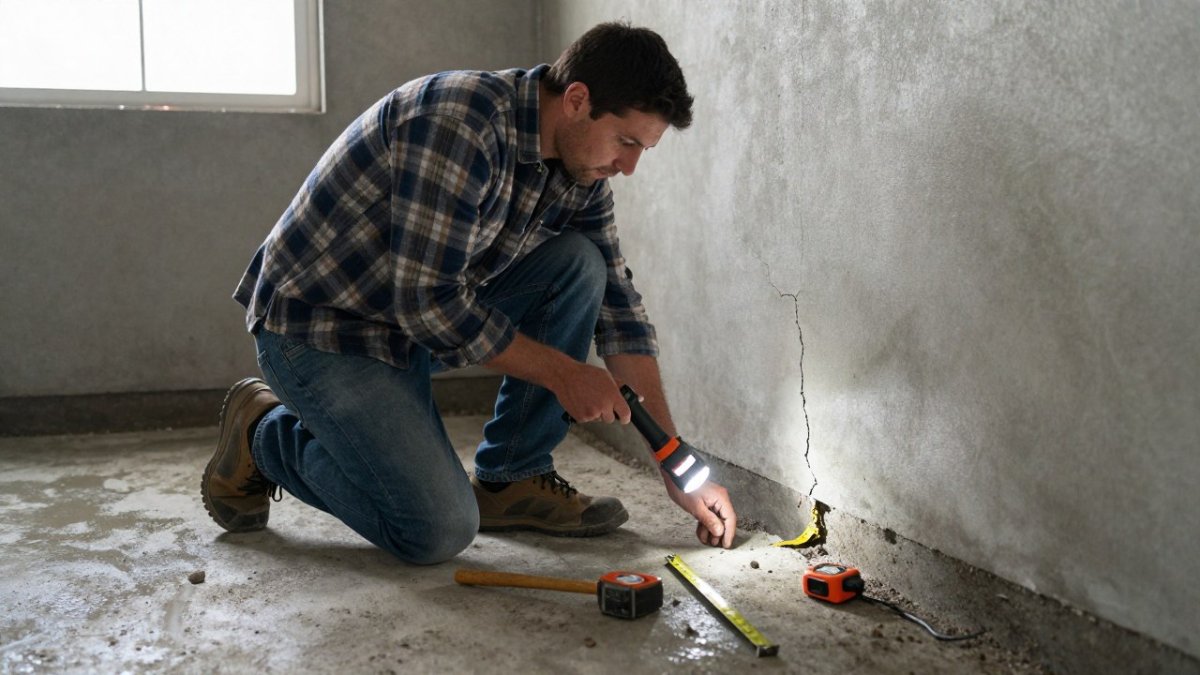
Hairline cracks (under about 1/16 inch). These are usually shrinkage cracks in poured concrete and often weep only during heavy rain.
Working cracks (about 1/16 to 1/8 inch, or cracks that reopen). These need a flexible repair, not a rigid patch. Epoxy injection is the standard for structural cracks in poured walls because it bonds the concrete back together; polyurethane injection is used for cracks that are actively leaking because it foams and expands to fill voids. Both are two-part systems injected under pressure through ports drilled along the crack. Pricing for crack injection depends on access, length, and scope of work. For a current quote, contact Allied Construction Corp directly.
Cove joints and penetrations. The joint where the floor meets the wall (the cove joint) and gaps around pipes, conduits, and anchors are common leak points.
Exterior waterproofing involves excavating down to the footing, applying a bituminous or rubberized membrane, and installing drainage board and drain tile.
A practical sealing sequence for minor leaks:
- Clean the crack or gap with a wire brush to remove loose material and efflorescence.
- Dampen the surface if using hydraulic cement; follow the package directions.
- Fill the crack, pressing the material in firmly and finishing it flush.
- Seal gaps around pipes and wall penetrations with a flexible, waterproof sealant.
- Re-check the work after the next heavy rain and note whether water reappears.
Watch out: Patching a crack while the water source outside is still active just pushes water to the next weak point.
Controlling Basement Humidity and Preventing Condensation
If your basement feels damp but the walls are dry after rain, humidity is likely the issue. Keep indoor relative humidity between 30 and 50 percent; staying below 60 percent discourages mold growth on drywall, wood framing, and stored belongings.
The mechanism behind summer condensation is the dew point, the temperature at which air becomes saturated and water starts to condense. Warm air holds more moisture than cool air, so when humid outdoor air enters a cool basement and surfaces sit below the dew point, moisture condenses on concrete, pipes, and ductwork.
Simple steps that help include:
- Keep basement windows closed on humid days and when outdoor dew point is high.
- Insulate cold water pipes and any cold ductwork so they do not sweat (the EPA).
- Avoid drying laundry in the basement without venting the dryer outside.
- Keep air moving with a fan so damp spots do not sit still.
- Run bathroom and laundry exhaust fans that vent outdoors, not into the basement.
Using a Dehumidifier and Improving Ventilation
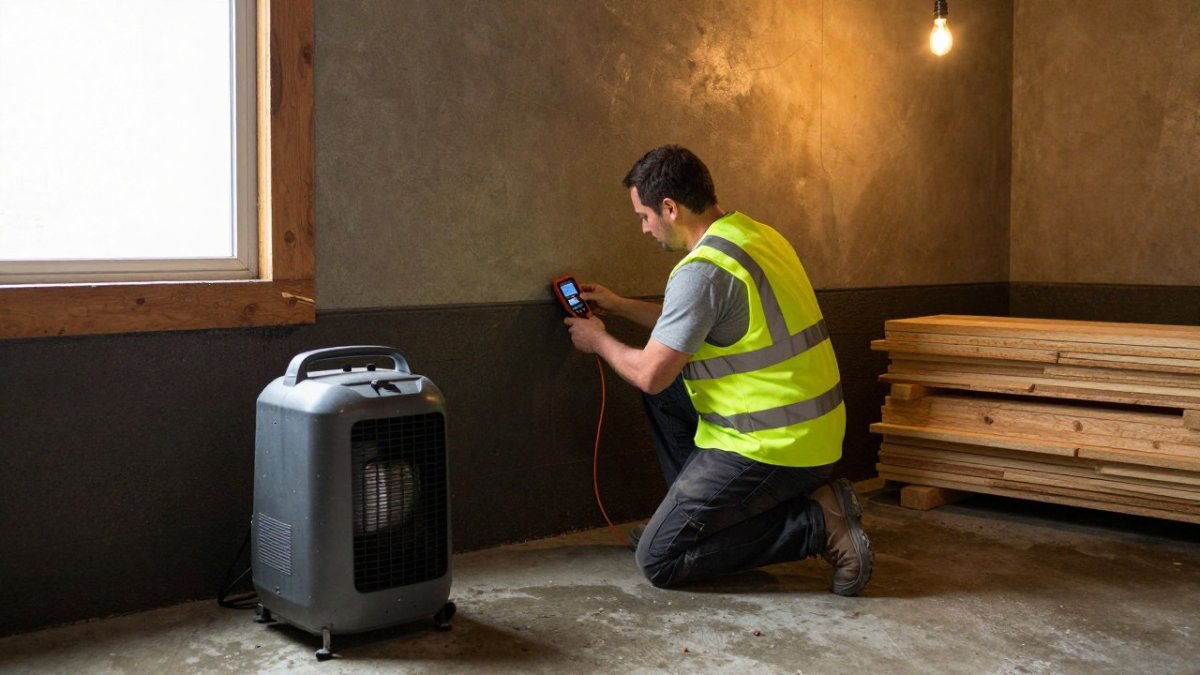
A dehumidifier is the most direct tool for controlling basement humidity.
Choose a unit with a continuous drain option so you do not have to empty the bucket daily.
Ventilation helps too, but only when the outdoor air is drier than the basement air.
Watch out: Placing a dehumidifier in a closed, unventilated corner can make it work harder without solving the problem. Keep the area around it clear and let air circulate.
The article gives these humidity and airflow guidelines for keeping a basement dry.
| Factor | Guideline | Note |
|---|---|---|
| Indoor relative humidity | 30 to 50 percent | Staying below 60 percent discourages mold |
| Dehumidifier setting | 40 to 50 percent | Use a hygrometer to monitor the level |
| Hygrometer cost | About $10 to $15 | Available at most hardware stores |
| Basement window rule | Keep closed above roughly 60°F dew point | Open only when outdoor dew point is lower |
| Cold pipes | Insulate | Prevents sweating and condensation |
| Exhaust fans | Vent outdoors | Do not vent into the basement |
Seasonal Humidity Guidance and Installing Interior Drainage Solutions
Basement moisture follows the seasons on Long Island and in New York City, with humidity usually peaking in late summer when outdoor dew points are high. When your basement surfaces sit below the dew point of the air coming in, condensation forms.
Plan your prevention around the year:
- Spring: Clean gutters, check grading, and inspect the foundation after snowmelt.
- Summer: Run the dehumidifier and watch humidity closely.
- Fall: Clean gutters again, seal cracks before cold weather, and check window wells.
- Winter: Keep the basement warm enough to avoid cold surfaces, and watch for leaks after thaws.
For basements with recurring seepage, an interior drainage system collects water at the base of the wall and channels it to a sump pump. Test the pump regularly by pouring water into the pit to confirm it switches on and drains properly. Request a written estimate from a qualified contractor before deciding.
Prevention Checklist and When to Call a Professional
Use this checklist to track your prevention work:
- Grade soil so it slopes away from the foundation
- Extend downspouts at least 4 to 6 feet from the house
- Clean gutters and window wells at least twice a year
- Seal small cracks and gaps around pipes with appropriate sealant
- Keep indoor humidity between 30 and 50 percent
- Run a dehumidifier during humid months
- Insulate cold water pipes to prevent sweating
- Test your sump pump every few months if you have one
- Re-check the basement after heavy rain
You can usually handle these yourself: gutter cleaning, extending downspouts, clearing window wells, sealing minor surface cracks, running a dehumidifier, and insulating pipes.
Call a professional when:
- Water enters during every rain, or the basement floods
- Cracks are wide, growing, or show horizontal displacement in the wall
- Mold covers a large area or returns after cleaning
- You need exterior waterproofing or an interior drainage system installed
- Your diagnosis points to water coming in and the source is unclear
Allied Construction Corp is a licensed home improvement contractor serving Nassau and Suffolk counties and all five boroughs. If you are dealing with active water, contact us for a free estimate.
Frequently Asked Questions
How can I prevent moisture in my basement?
Start by keeping water away from the foundation. Make sure the ground slopes away from the house, clean gutters so they drain at least several feet from the walls, and extend downspouts outward. Inside, keep indoor humidity between 30 and 50 percent, run a dehumidifier when levels climb, and vent dryers and bathrooms to the outside. Seal visible cracks and check plumbing joints for slow leaks. Most basement moisture problems come from a combination of these small, fixable sources rather than one major failure.
What causes moisture on basement walls?
Moisture on basement walls usually comes from one of two sources. Water intrusion means liquid water is entering through cracks, porous concrete, or poor drainage, often after rain. Condensation happens when warm, humid indoor air meets cold concrete surfaces and the moisture forms droplets. A simple test is to tape a square of plastic sheeting to the wall for two days. Moisture on the wall side of the plastic points to condensation or seepage through the concrete, while moisture on the room side points to humidity.
How do I stop condensation in my basement?
Condensation forms when humid air touches cold surfaces, so reduce the humidity and warm the surfaces. Keep relative humidity below about 50 percent, using a dehumidifier sized for your basement and a hygrometer to monitor levels. Improve air movement with a fan or ventilation, and insulate cold walls and pipes so their surfaces stay closer to room temperature. Avoid drying clothes indoors, and make sure any exhaust from appliances leads outside. Condensation that disappears when humidity drops confirms this as the cause.
When should I call a professional about basement moisture?
Call a professional if water appears after heavy rain despite good grading and gutters, if you see horizontal or widening foundation cracks, or if the wall bows or bulges inward. Persistent standing water, a sump pump that runs constantly, or recurring mold that returns after cleaning also warrant an evaluation. Professionals can determine whether the problem is groundwater seepage, a drainage failure, or a plumbing leak. Allied Construction Corp offers water damage restoration and basement improvements across Nassau and Suffolk counties and the five boroughs; contact the company directly for a current quote, since pricing depends on the scope of work.