 How-to
How Do You Get Smoke Smell Out of a House?
Last Updated: October 27, 2026
Quick Summary
Smoke odor removal starts with identifying the smoke source, since cigarette, cooking, wildfire, and fire residue each need a different approach. Ventilate the home, remove soft items that hold odor, clean walls and ceilings top-down, then seal surfaces with stain-blocking primer before repainting.
- Identify the smoke source first, because each type calls for a different starting sequence.
- Remove and wash soft items, and bag strongly smelling items outside the main living area.
- Clean ceilings first, then walls, then floors, so drips don't ruin finished work.
- If odor persists after cleaning, residue has soaked into paint; seal with stain-blocking primer before repainting.
- Call a professional if the smell returns after repeated cleaning or smoke is inside ductwork.
Table of Contents
- Identify the Smoke Source and Assess the Damage
- Ventilate the Home and Remove Contaminated Items
- How to Remove Smoke Smell From Walls and Ceilings
- How to Get Smoke Smell Out of Furniture and Upholstery
- Best Odor Absorbers for Smoke Smell and How to Use Them
- How Long Smoke Odor Lasts in a House and What Speeds It Up
- Safety Cautions for Ozone Generators, Foggers and Chemical Products
- When to Stop DIY and Call a Professional for Smoke Damage
- Frequently Asked Questions
Smoke odor clings to walls, fabric, and air long after the flames are out, and it can be hard to know where it's coming from. Allied Construction Corp provides fire, smoke, and water damage restoration services to homeowners across Nassau, Suffolk, and the five boroughs. This guide walks through practical, do-it-yourself steps for getting smoke smell out of a house, from finding the source to knowing when the job is too big to handle alone.
Identify the Smoke Source and Assess the Damage
The most common sources of smoke odor are cigarette smoke, cooking smoke, wildfire smoke, or residue from a fire, and each one calls for a different approach to smoke odor removal.
Use this source-based decision tree to choose your starting sequence:
Cigarette smoke (thirdhand smoke)
- Residue type: sticky, yellowish film of nicotine and tar that coats walls, ceilings, and soft furnishings; odor reactivates in humid weather or when the HVAC runs.
- First moves: remove and wash all fabrics, clean hard surfaces top-down with a degreasing cleaner, then seal walls with a stain-blocking primer before repainting. Absorbers alone will not fix it.
- Watch for: residue on light fixtures, outlet covers, and window blinds, which are commonly missed.
Cooking smoke (grease and char)
- Residue type: thin, greasy film near the kitchen that traps odor; often concentrated on cabinets, range hood, and ceiling above the stove.
- First moves: degrease the kitchen zone first, clean or replace the range hood filter, then ventilate and use absorbers. Whole-house cleaning is usually unnecessary unless the HVAC spread the odor.
- Watch for: odor that returns only when the kitchen heats up, which points to grease residue on surfaces rather than airborne smoke.
Wildfire smoke
- Residue type: fine particulate and ash that settles on surfaces and penetrates through gaps; odor can persist in insulation, attic spaces, and HVAC systems even when surfaces look clean.
- First moves: change HVAC filters early, run a HEPA and activated-carbon purifier, wet-wipe surfaces rather than dry-dusting (dry dusting resuspends particles), and wash fabrics. Repeated cleaning cycles are normal.
- Watch for: odor that worsens when the system runs, which suggests contamination in ducts or the air handler.
Fire-damage residue
- Residue type: soot and char, often with a wet, acrid smell; may include water damage from extinguishing the fire.
- First moves: document and photograph before cleaning for insurance, remove charred materials, then clean and seal. This category most often exceeds DIY capacity.
- Watch for: soot on surfaces far from the fire (it travels), and any musty smell that suggests hidden moisture or mold.
Walk through the house with your nose and eyes. Smoke tends to be strongest near the source and in soft, porous materials like curtains, carpet, and upholstery. Look for:
- Dark or greasy film on walls, ceilings, and light fixtures
- Yellowing or discoloration on white paint and trim
- A smell that gets stronger when the heat or air conditioning runs
Smoke exposure can hide mold growth behind surfaces. If you notice a damp or musty smell along with the smoke, check for signs of hidden mold after smoke damage before you start cleaning, since mold needs its own treatment.
If you find heavy soot or residue across large areas, the damage may be more than a cleaning job. A fire and smoke damage restoration service can assess the full extent of the damage and give you a clear plan.
Ventilate the Home and Remove Contaminated Items
Fresh air is your first tool for smoke odor removal. Open windows on opposite sides of the house so air can move through. Set a box fan in a window to pull smoky air out, and run your HVAC system with the fresh-air setting on if it has one.
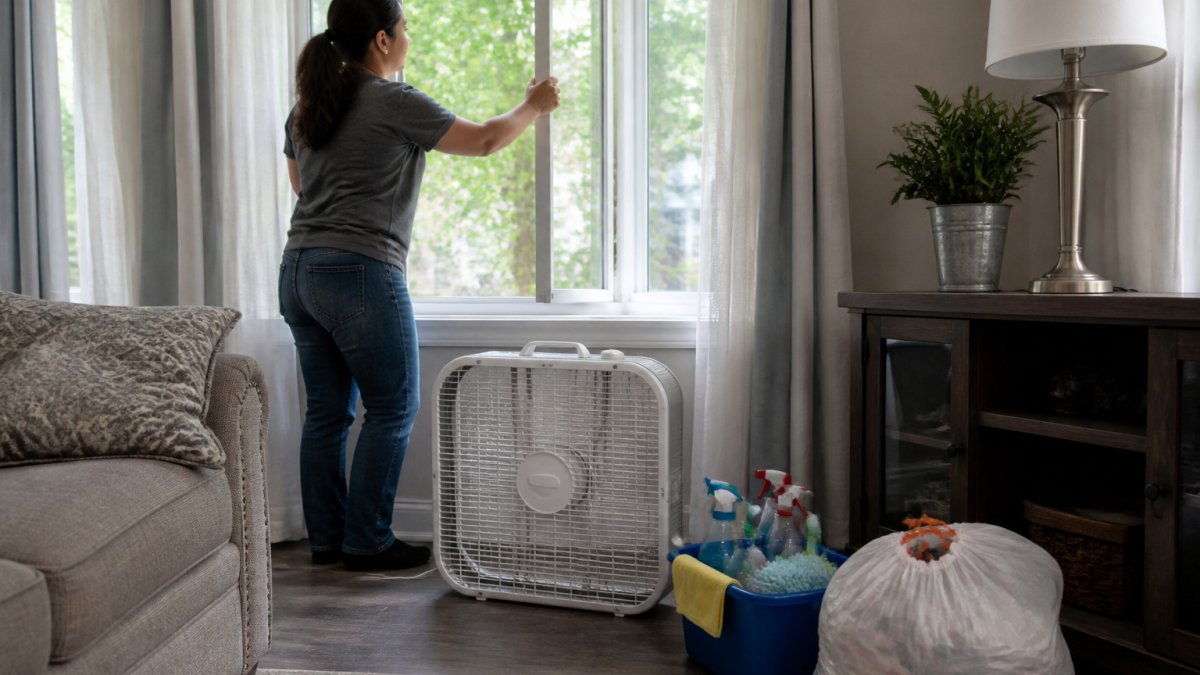
Next, remove the items that hold the smell most. Pull out anything soft that can't be washed in place, and move it outside to air out. Bag up:
- Cushions, pillows, and throw blankets
- Stuffed toys and soft décor
- Paper, books, and anything that smells strongly
Keep these items in a separate area until they're clean. Smoke smell spreads easily, so a pile of smelly items in the living room will keep refreshing the odor in the rest of the house.
How to Remove Smoke Smell From Walls and Ceilings
Walls and ceilings often hold the strongest residue because smoke rises and settles on them. Clean the surfaces before you try anything else, because paint and dirt trap odor.
Cleaning Hard Surfaces Room by Room
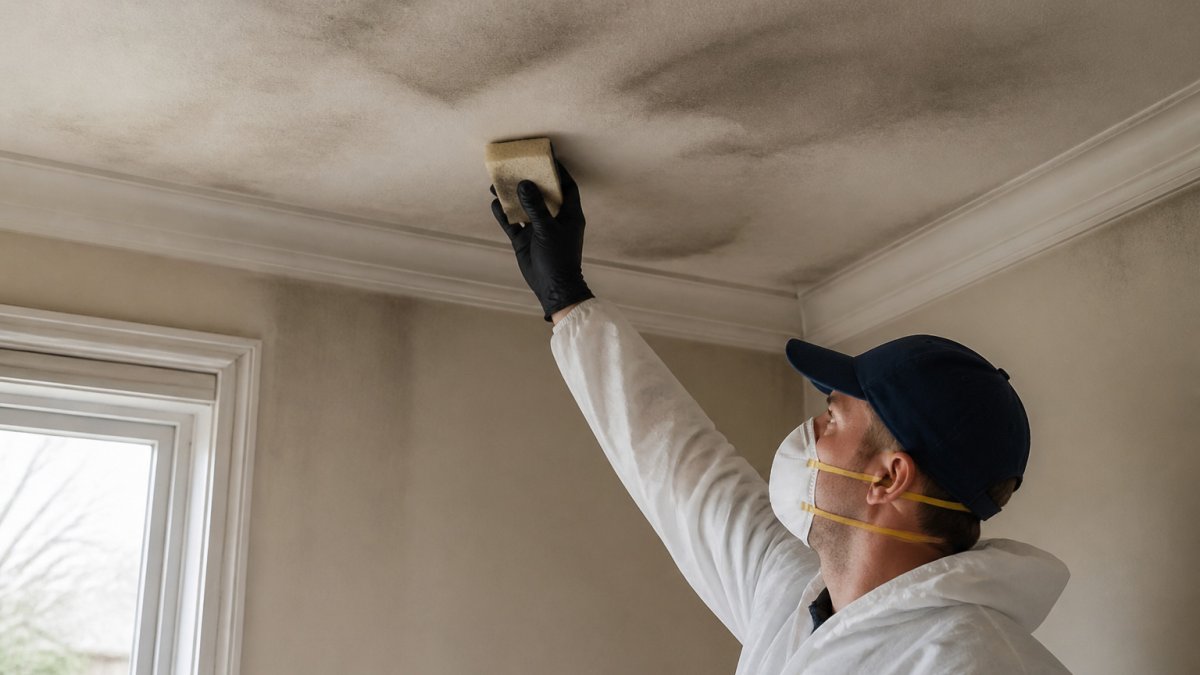
Work from the top of the room down. Clean ceilings first, then walls, then floors, so drips don't ruin work you've already finished. Use a clean sponge and a mild cleaning solution, and change the water often.
A simple order of operations:
- Dust ceilings and walls with a dry microfiber cloth or a soft brush
- Wash ceilings with a sponge and mild cleaner, working in small sections
- Wash walls from the bottom up to avoid streaks
- Clean trim, doors, light switches, and window frames
- Rinse surfaces with clean water and let them dry fully
Test your cleaner on a small hidden spot first to make sure it won't damage the paint.
Sealing Residue Before Repainting
If the walls still smell after cleaning, the residue has likely soaked into the paint. Covering it with a fresh coat of regular paint often lets the smell bleed through. Many people find that a stain-blocking primer works better.
Let the primer dry completely before applying topcoat. Ventilate the room while you work, and wear a mask and gloves.
How to Get Smoke Smell Out of Furniture and Upholstery
Soft materials absorb smoke, so they need more attention than hard surfaces. Washable items are the easiest to fix.
- Wash clothing, linens, blankets, and curtains in hot water with a good laundry detergent. Add a cup of white vinegar or a laundry odor booster to the rinse cycle.
- Vacuum upholstery and carpets thoroughly, using a brush attachment on fabric and cushions.
- Sprinkle baking soda over carpets and upholstery, leave it overnight, then vacuum it up.
Some items can't be cleaned well at home. Heavy, non-washable upholstery or carpet that still smells after several rounds of cleaning may need professional cleaning or replacement. Ask a cleaner whether they offer odor treatment, not just standard cleaning.
Best Odor Absorbers for Smoke Smell and How to Use Them
Odor absorbers can help pull smell out of the air, but they work best after you've removed the source. Think of them as a finishing step, not a fix.
- Baking soda: Chemically, it is mildly alkaline and can neutralize some acidic odor compounds on contact. Sprinkle it on carpets and upholstery, leave it several hours to overnight, then vacuum thoroughly. In open bowls it has limited air-cleaning power; its real value is on surfaces and fabrics. It is cheap and safe around pets and kids.
- Activated charcoal: Porous carbon traps odor molecules on its surface. Place bags or open containers in closed spaces like closets, cabinets, and vehicles. It needs time, often several days to a week, and it works best in small, enclosed areas rather than open rooms. Replace or recharge it according to the product directions; once the pores are saturated it stops working.
- White vinegar: The acetic acid can help neutralize alkaline odor compounds, and the vinegar smell itself fades as it evaporates. Bowls of vinegar in a room offer modest benefit; wiping surfaces with a diluted vinegar solution is more effective because it contacts the residue. Do not use vinegar on stone, marble, or aluminum, which it can etch or discolor.
Absorbers can't replace cleaning. Use them alongside ventilation and surface cleaning for the best results.
To tell whether you are removing odor or masking it, do a closed-room check: close the windows and doors for a few hours with no fragrance products running, then walk in. If the smoke smell is still noticeable, residue remains on surfaces, in fabrics, or in the HVAC system, and you should return to cleaning rather than adding more absorber.
The article compares common odor absorbers by how they work, how long they take, and where they fall short.
| Absorber | Best for | Key difference |
|---|---|---|
| Baking soda | Carpets and upholstery | Works on surfaces; limited air-cleaning power |
| Activated charcoal | Closets, cabinets, vehicles | Needs several days to a week; works in enclosed spaces |
| White vinegar | Wiping surfaces | Wiping beats bowls; avoid stone, marble, aluminum |
| Air purifier (HEPA + carbon) | Whole rooms | Carbon stage handles odor; cleans air, not surfaces |
| Odor-neutralizing products | Odor compounds | Break down odor; follow label and test first |
How Long Smoke Odor Lasts in a House and What Speeds It Up
Smoke odor can last for weeks or even months if the residue stays in porous materials. The exact time depends on how heavy the smoke was, how long it sat, and how much of the house was affected.
A few things can speed the process:
- Clean surfaces and remove soft items early, before the residue sets
- Keep air moving with fans, open windows, and a running air purifier
- Replace HVAC filters, since they can hold smoke particles and release odor
If the smell returns after a few weeks even though you've cleaned, the residue may still be inside walls, insulation, or ductwork. That's a sign to get help.
Safety Cautions for Ozone Generators, Foggers and Chemical Products
Many people reach for stronger tools, such as ozone generators, thermal foggers, or chemical odor bombs. Ozone is a lung irritant, and it can harm people, pets, and plants when used in an occupied home (the EPA).
Follow these rules:
- Never mix cleaning products. Bleach and ammonia-based cleaners can create dangerous fumes together (the CDC).
- Read and follow every label, and use products only as directed.
- Keep people and pets out of the area during and after treatment, for as long as the label or professional recommends.
- Wear gloves, eye protection, and a mask when cleaning soot or using chemicals.
Masking sprays and fragrance products cover up odor without removing it. If the smell only returns when the scent fades, the source is still there.
When to Stop DIY and Call a Professional for Smoke Damage
Some smoke damage is too much for a weekend project. Consider calling a professional if you notice any of the following:
- Soot or residue covers large areas or has soaked into walls and insulation
- The smell returns after repeated cleaning
- You smell smoke inside ductwork, or the HVAC system spreads odor through the house
- The fire was significant or the home had structural or water damage
If you're ready to hire help, you can request an estimate from Allied Construction Corp. We serve homeowners across Nassau and Suffolk counties and all five boroughs.
Frequently Asked Questions
How long does smoke smell take to go away?
Smoke odor can be difficult to remove. If the smell persists after cleaning, consider seeking professional help.
What absorbs smoke smell the most?
Smoke odor removal approaches vary. Consider the affected materials and the extent of the damage when deciding what steps to take.
What can help remove smoke smell from a house?
Smoke odor removal steps depend on the affected materials and the extent of the damage. For persistent odor or significant damage, consider professional restoration services.
When should homeowners call a professional for smoke odor removal?
Consider professional restoration services when smoke damage is extensive or the odor persists after cleaning. Allied Construction Corp provides fire and smoke damage restoration services.