 How-to
How to Know When to Replace Bathroom Fixtures
Last Updated: November 11, 2026
Quick Summary
Replace bathroom fixtures when repairs stop holding, when several parts fail at once, or when the fixture is past its typical service life. Faucet bodies often last 10 to 15 years, and a leak that returns within weeks after a repair usually signals worn parts beyond a simple fix.
- Faucet cartridges typically last 5 to 10 years, while faucet bodies last 10 to 15 years.
- A steady drip can waste a significant amount of water over a year, according to the EPA.
- Replace the fixture if two or more unrelated problems have appeared in the past two years.
- A leak that returns within a few weeks after repair means the seat or valve is damaged.
- Replace worn angle stops, since they can fail under pressure and cause water damage.
Table of Contents
- How Long Do Bathroom Fixtures Last by Type
- Signs You Need a New Bathroom Faucet
- Persistent Leaks, Drips, and Water Waste
- Corrosion, Mineral Buildup, and Poor Water Flow
- Repair or Replace Bathroom Faucet: A Decision Framework
- How to Replace a Bathroom Faucet, Plus Compatibility and Cost Checks
- Scheduling Your Bathroom Fixture Replacement With a Licensed Contractor
- Frequently Asked Questions
When a bathroom faucet starts leaking, streaking, or sputtering, most homeowners wonder whether a simple repair will do the job or whether it is time to replace bathroom fixtures altogether. The answer depends on the fixture's age, the type of damage, and how often you have already made repairs. The signs are usually easier to read than people expect.
Bathroom fixtures include faucets, showerheads, shower valves, tub fillers, and toilet components. Each one wears out at a different pace, so there is no single answer to when to replace bathroom fixtures. This guide walks through typical lifespans, the warning signs we look for, and a practical framework for choosing between repair and replacement.
How Long Do Bathroom Fixtures Last by Type
The table below lists typical service life for the fixtures found in a standard American bathroom, along with what usually ends that service life. These are working ranges for planning, not guarantees. Actual life depends heavily on water quality, daily use, and whether the fixture was installed correctly.
| Fixture | Typical service life | What usually ends it | Early-warning sign |
|---|---|---|---|
| Faucet cartridge or ceramic disc | 5 to 10 years | Mineral grit, wear on the seal surface | Drip from the spout after the handle is closed |
| Faucet body (brass or zinc) | 10 to 15 years | Internal corrosion, dezincification in poor water | Crust, pitting, or handle play that can't be tightened |
| Showerhead | 5 to 10 years | Mineral clogging of nozzles | Spray that narrows or splits within a few weeks of cleaning |
| Shower valve body | 15 to 25 years | Seized stem, scale inside the valve | Temperature swings or water that won't shut off fully |
| Tub filler | 10 to 20 years | Diverter wear, leaking stem | Water leaking from the spout while the shower runs |
| Toilet flapper | 3 to 6 years | Rubber breakdown from chlorine and age | Running toilet or a phantom flush |
| Toilet fill valve | 5 to 8 years | Diaphragm wear, mineral buildup | Slow refill, hissing, or water running into the overflow tube |
| Supply lines and angle stops | 7 to 10 years for braided lines; angle stops often longer | Rubber degradation, seized valve handles | Bulging hose, drips at the fitting, or a stop that won't close |
Two points help you use this table. First, the replaceable component often fails years before the fixture body does, so a 12-year-old faucet with a working body may still need only a cartridge. Second, shutoff valves are the most overlooked item. A worn angle stop can fail under pressure when you need it most, and it is inexpensive to replace relative to the water damage it prevents.
Water quality is the largest variable. Hard water is one of the more common causes of mineral deposits that shorten cartridge and showerhead life. Use the ranges above as a baseline, then adjust based on what you observe in your own home.
Typical service life of bathroom fixture components
Signs You Need a New Bathroom Faucet
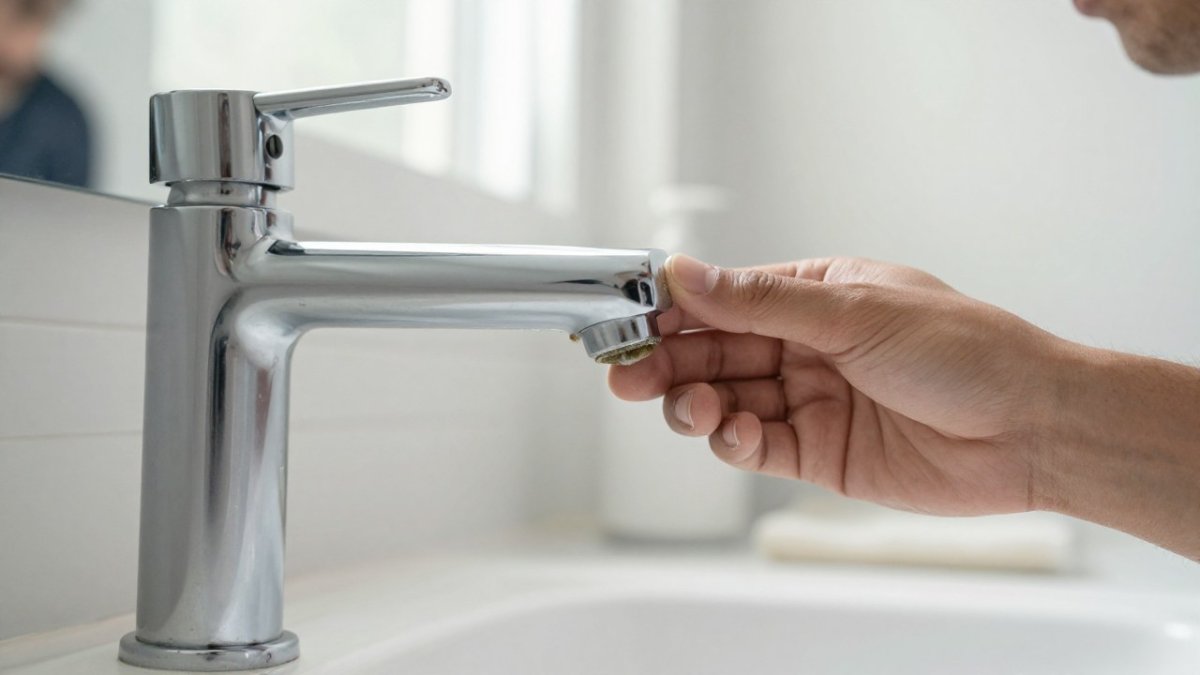
A faucet that is still functional is not always a healthy one. These signs point toward replacement:
- The handle feels loose, wobbly, or hard to turn
- Water leaks from the base or around the handle, not just the spout
- The finish is cracked, chipped, or peeling, exposing the metal beneath
- Water temperature is hard to control, swinging hot and cold
- The faucet has needed repairs more than twice in a short period
Many homeowners ask whether a faucet can be fixed rather than swapped. A new cartridge or washer can solve a single leak. When several parts fail at once, replacing the whole unit usually costs less over time.
Persistent Leaks, Drips, and Water Waste
A steady drip may look minor, but it adds up. A faucet dripping steadily can waste a significant amount of water over a year (the EPA). EPA WaterSense leak information
Here is how to tell whether a leak needs a repair or a full replacement:
- Repair candidate: a single worn washer or O-ring, with the rest of the fixture in good shape
- Replacement candidate: leaks from several points, corroded internal parts, or repeated failures after recent repairs
- Check for hidden loss: a running toilet or a slow leak under the sink can waste water without any visible drip
Common mistake: Tightening a leaking handle again and again. Each tightening can damage the seat and cartridge further. If the leak returns within a few weeks, the part is likely worn beyond a simple fix.
Corrosion, Mineral Buildup, and Poor Water Flow
Hard water leaves mineral deposits that clog aerators, valves, and showerheads. Over time the deposits reduce flow and can make the fixture harder to operate. Corrosion on brass or chrome also signals that the metal is failing.
Look for these warning signs:
- White or greenish crust around the spout or aerator
- Water spraying in several directions instead of one clean stream
- Pressure that drops sharply when the fixture is used
- Pitting, rust spots, or flaking on exposed metal
Cleaning removes light buildup. Heavy corrosion inside the body usually means replacement is the better choice, because the damage is hard to reach and often keeps returning.
Repair or Replace Bathroom Faucet: A Decision Framework
The framework below scores four factors so you can see which way the decision leans. Score each factor, then read the result at the end.
Factor 1: Fixture age. Under 8 years, repair is usually reasonable. From 8 to 12 years, weigh the other factors closely. Over 12 years, replacement is usually the better path, because brass bodies and internal seats have often worn past what a cartridge swap can restore.
Factor 2: Parts availability. Check whether the manufacturer still sells the cartridge or seal kit for your model. A discontinued cartridge turns a simple repair into a search, and a search often costs more than the faucet. If you cannot identify the model, or the parts are no longer sold, treat that as a point toward replacement.
Factor 3: Number of failure points. Count the separate problems you have seen in the past two years: a drip, a loose handle, a finish problem, a temperature problem. One problem is a repair signal. Two or more unrelated problems indicate a worn body, not a worn part.
Factor 4: Likelihood of repeat failure. This is the factor most people miss. If the same leak has returned within a few weeks after a repair, the seat or valve body is likely damaged beyond a simple fix. Repeated repairs on a failing fixture cost more over time than a single replacement.
Reading the result
- Factors 1 and 2 favor repair, and factors 3 and 4 show a single problem: repair is the sensible choice.
- Any two factors pointing toward replacement, or a repeat failure alone, points to replacement.
- Mixed results with a fixture under 10 years old and available parts usually favor repair, but plan to replace if the problem recurs.
A rough cost check. Compare the repair cost, including the part and any plumber's time, with the price of a comparable new faucet. Treat the comparison as a guide, since costs vary by region and fixture quality.
The framework works best when you write down the factors before deciding.
How to Replace a Bathroom Faucet, Plus Compatibility and Cost Checks
Replacing a faucet is a manageable DIY job for many homeowners, but it requires care with the connections. Follow these steps:
- Turn off the hot and cold angle stops under the sink.
- Open the faucet to release any remaining pressure.
- Disconnect the supply lines and remove the old mounting nuts.
- Lift out the old faucet and clean the sink surface.
- Set the new faucet in place and tighten the mounting hardware.
- Reconnect the supply lines and slowly turn the angle stops back on.
- Run the faucet and check every connection for leaks.
Before you buy, check compatibility:
- Count the holes in your sink (single-hole, three-hole, or center-set)
- Confirm the supply line size and connection type
- Check the faucet's mounting style against your countertop and sink
- Measure the spout height and reach so the faucet clears your sink
Cost and scope: Prices vary widely by fixture quality, brand, and whether a licensed plumber is needed. For a current quote on your specific fixture, contact Allied Construction Corp directly, since pricing depends on the fixture type, the scope of work, and site conditions.
Scheduling Your Bathroom Fixture Replacement With a Licensed Contractor
If the job goes beyond a single faucet, such as a full bathroom refresh or work tied to water damage, a licensed contractor can plan the sequence and coordinate permits. Allied Construction Corp handles bathroom remodeling projects for homeowners across Nassau and Suffolk counties and the five boroughs.
To get started, you can request an estimate for your project, or review the bathroom remodeling services we offer for homes in the area.
For homeowners in Suffolk County weighing bathroom work, our small bathroom remodeling guide for Suffolk County covers scope, timing, and cost considerations in more depth.
Is your bathroom faucet giving you more trouble than it is worth? Allied Construction Corp can review the fixture, explain your options, and schedule the work around your household. Get started with Allied Construction Corp and a clear plan for a bathroom that works reliably.
Frequently Asked Questions
How long do bathroom fixtures typically last?
Lifespans vary by fixture type and by how hard the water is. Lifespans depend on the fixture and on daily use. Hard water, high household use, and skipped maintenance tend to shorten these ranges. If a fixture is past its typical lifespan and showing repeated problems, replacement usually makes more sense than another repair.
How often should bathroom faucets be replaced?
There is no fixed schedule. Most bathroom faucets are replaced when they become hard to repair, leak repeatedly, or no longer match the bathroom. Many homeowners consider replacement once a faucet reaches about 10 to 15 years old, especially if it has needed several repairs. Checking the faucet for drips, loose handles, and mineral buildup each year helps you catch problems early.
Should I repair or replace a leaking bathroom fixture?
Repair is usually the better choice when the leak comes from a single worn part, such as a washer, O-ring, or cartridge, and the fixture is otherwise in good condition. Replacement makes more sense when the body of the fixture is corroded, cracked, or leaking from multiple points, when parts are no longer available, or when you have already repaired it several times. Comparing the repair cost with the cost of a new fixture, plus the value of fewer future repairs, makes the decision clearer. Pricing depends on the fixture, the scope of work, and local labor, so request a current quote from Allied Construction Corp at alliedconstructioncorp.com before deciding.
Can hard water damage bathroom fixtures?
Yes. Hard water leaves mineral deposits that clog aerators and cartridges, reduce water flow, and can corrode finishes over time. Mineral buildup can also make handles stiff and cause drips as seals wear unevenly. Cleaning aerators periodically and using a water softener or filter can slow this damage. If buildup has eaten into the finish or internal parts, replacement is often the more durable fix.